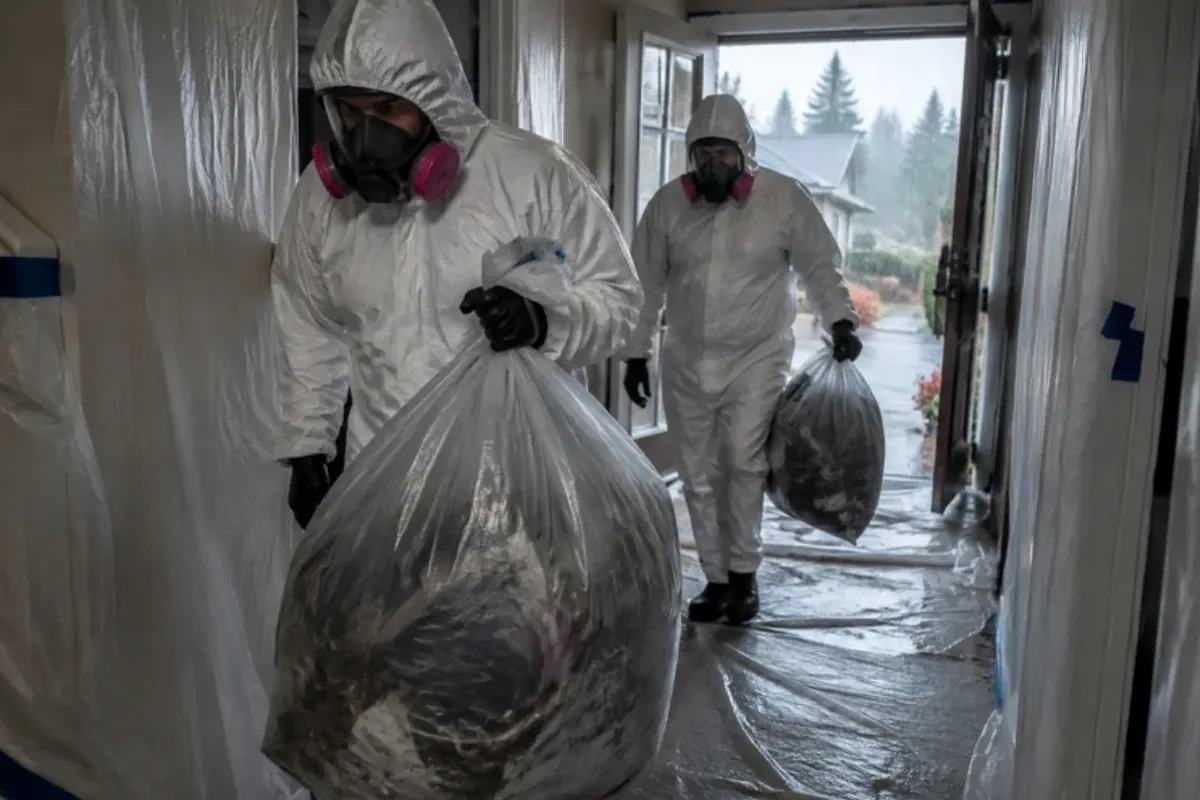
Containment, air filtration and careful bagging keep spores from traveling to clean rooms during the work. Without them, a small patch can turn into a whole-house cleanup. Call the number on this page to be connected with a local mold company in Smithfield.
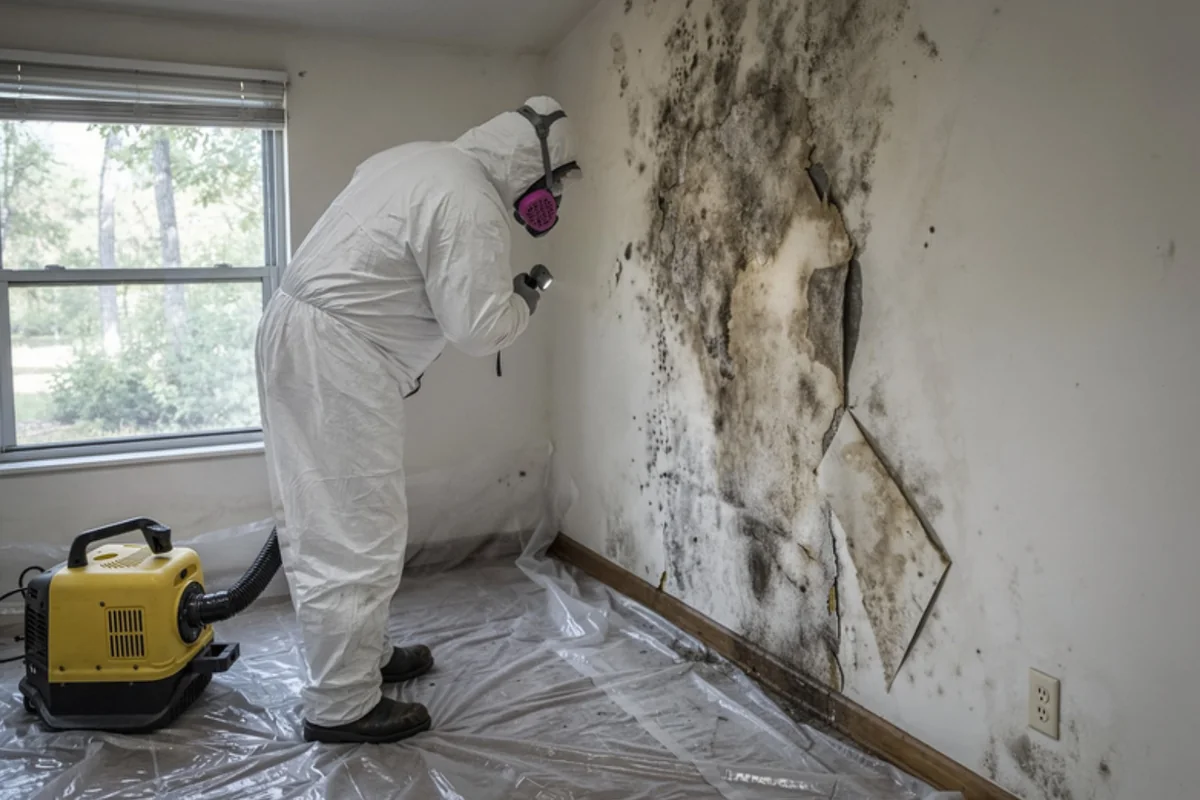
HEPA vacuums and damp wiping
After the damaged layers come out, framing and surfaces get vacuumed with HEPA-filtered machines and wiped with detergent solutions. The goal is to lift spores and residue off the material rather than simply coat it. Dust control continues until the zone is dismantled.
The filters trap fine particles instead of blowing them back into the room.
Winter freezes can start summer problems
A hard freeze can split a pipe in an exterior wall or crawl space. The leak may seem minor in January, yet the wet framing and insulation have all spring to grow mold in the humid, mild stretch that follows.
Fix every leak and thaw-related split before any new drywall goes back up.
Homes near a river, creek or lake can sit on low ground where the water table rises after storms. Crawl spaces and lower walls here tend to stay damp longer and need extra attention to drainage.
Read the guide before the quote
Our cost guide explains the usual line items so you can read a bid with less guesswork. Ask any company to separate demolition, cleaning, drying and rebuilding so each part can be compared across several quotes.
That keeps decisions simple and removes the guesswork from reading line items.
Before you hire in Smithfield
For a big tear-out and rebuild, look the company up on the NC Licensing Board for General Contractors site; its search works by name, number or county, and a license is required at $40,000 and up.
Renting? N.C.G.S. 42-42 requires landlords to keep a home fit and habitable and to repair supplied plumbing and heating; outside an emergency, send the repair request in writing.
Cleanup on its own rarely needs a permit. Replacing framing, wiring, ductwork or plumbing afterward can, and Johnston County Building Inspections can tell you what applies.
Flood water and a burst pipe are usually treated differently by insurers; the state's FRIS flood maps show whether a lot sits in a mapped flood zone.
Callers here are often matched with companies that work in Selma, Four Oaks and Clayton as well.
Photos before, during and after
Reputable crews photograph the area at each stage. Those pictures help with an insurance file, a home sale or a later dispute. Ask for them, along with any moisture readings taken, and keep them with your other house records.
Also keep your insurance claim information handy, since adjusters may want the same records.
Warning signs to act on
A musty odor that lingers, ceiling stains that spread, peeling paint or a floor that feels soft are good reasons to call. If you have health concerns, talk with your doctor, and do not wait for the problem to grow while you decide.
Treat any water event as urgent, even if the area looks dry by the next day.
Mold Removal & Remediation questions in Smithfield
Can I stay in the house during removal?
What if mold keeps coming back after cleanup?
What should I do right after finding mold?
Who handles the paperwork if I'm selling my house?
More mold services in Smithfield
Mold Removal & Remediation nearby
Helpful guides
Sources
- Johnston County Building Inspections Department
- Johnston County Building Inspections Department: flood information
- N.C. General Statutes 87-1: general contractor license
- NC Licensing Board for General Contractors: consumer FAQ
- NC Division of Public Health: choosing a mold consultant
- N.C. General Statutes 42-42: landlord to provide fit premises
- NC Flood Risk Information System
Last updated: