Bleach is not what most plans rely on. EPA does not generally recommend biocides for routine cleanup, and cleaning with HEPA vacuums and detergent while removing wet materials works better than spraying. Call the number on this page to be connected with a local mold company in Clayton.
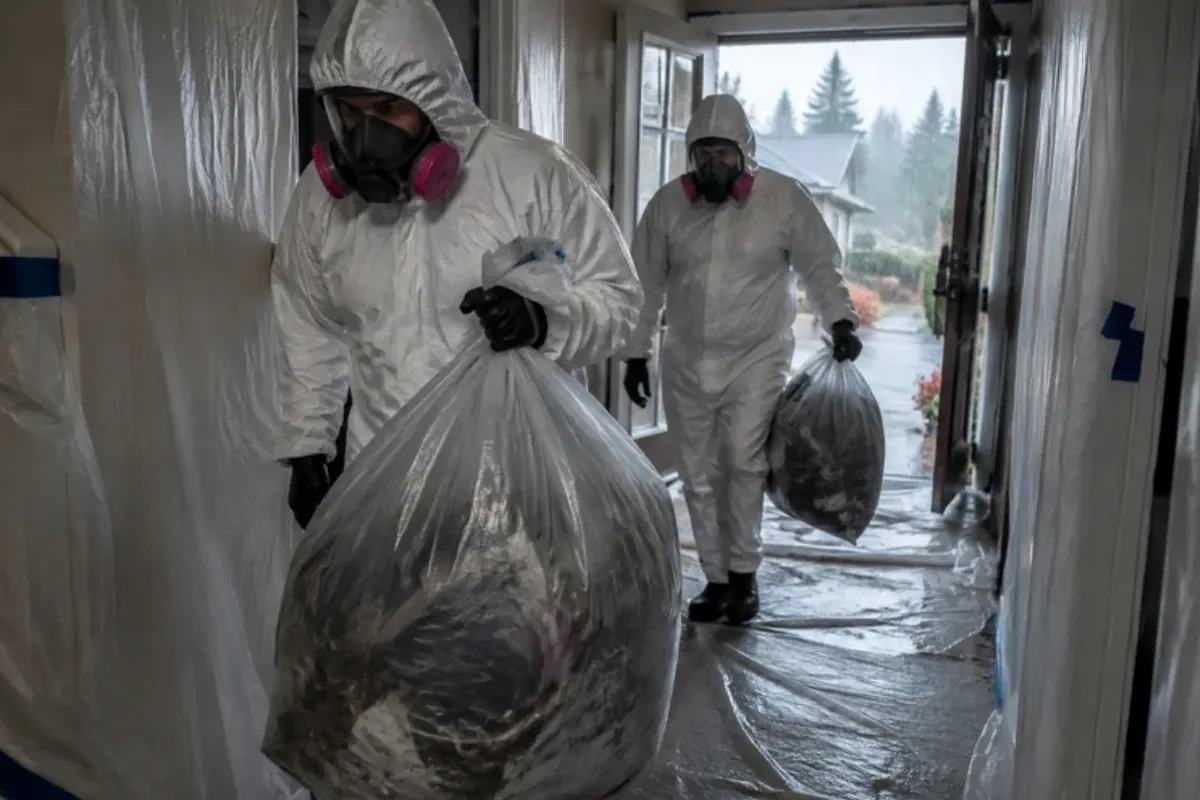
Removed or cleaned?
Crews sort materials by how porous they are.
| Material | Usual outcome |
|---|---|
| Wet drywall | Removed |
| Insulation | Removed |
| Wood framing | Cleaned, dried |
| Tile, glass, metal | Cleaned |
Anything porous that stayed wet for days usually goes into the bag, while solid surfaces can be cleaned and kept. Ask the company to mark on the plan which category each item falls into.
Air handlers and condensate lines
Heat pumps run through much of the year here, so a blocked condensate line or poorly sealed air handler can drip for months. When that unit sits in a crawl space or attic, the dampness goes unnoticed until the smell shows up.
Clay soil makes these puddles last well beyond the end of the storm.
Many Clayton homes were built in the 2000s and still sit under builder warranties or original finishes. Photograph damage and read any warranty terms before work begins, since they can affect who handles repairs.
Low ground along creeks and shorelines holds water after heavy rain. If the house sits there, ask how the company will address drainage and humidity, not only the visible growth, so the work lasts.
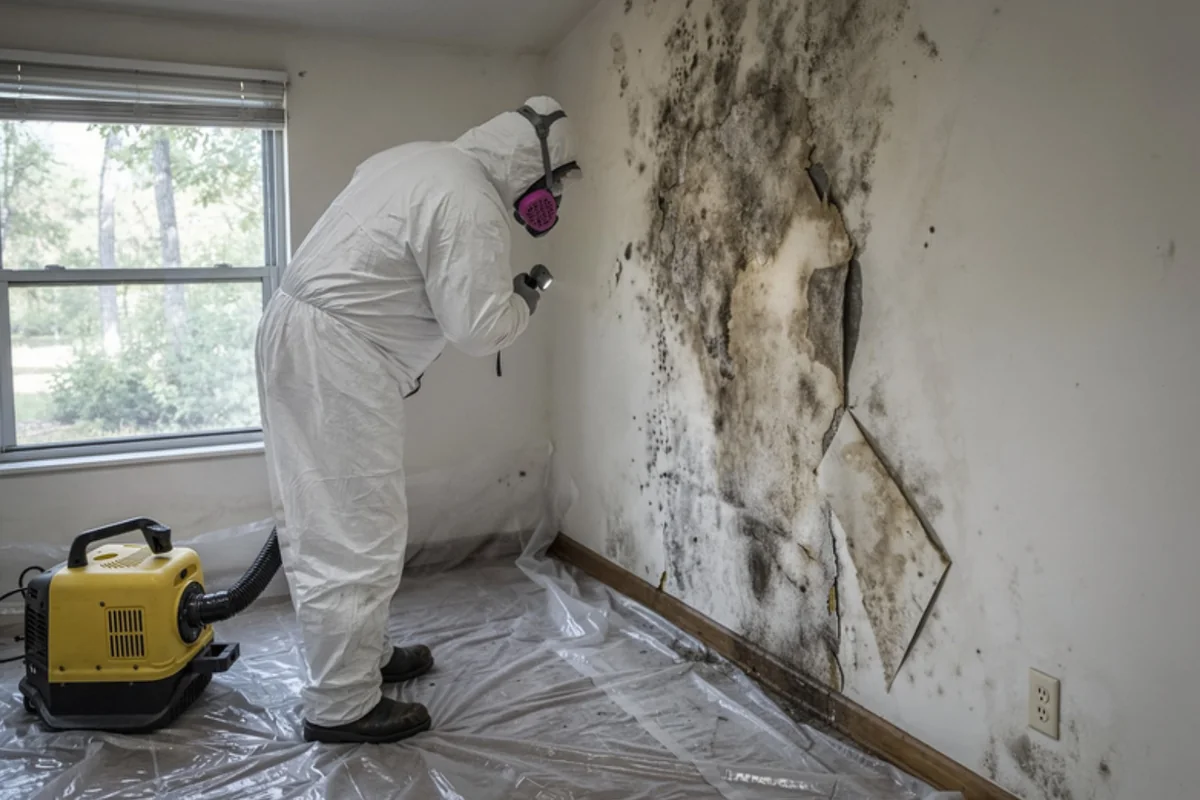
What moves the price
- Square footage affected
- How many materials come out
- Crawl space or attic access
- Containment and air scrubbing needs
- Days of drying equipment
- Rebuilding afterward
None of these is fixed, because every house differs. A fair quote shows how each one applies, and a written scope shows which are actually part of the job.
Clayton permits, rentals and contractor checks
For a big tear-out and rebuild, look the company up on the NC Licensing Board for General Contractors site; its search works by name, number or county, and a license is required at $40,000 and up.
Tenants should put leak and mold complaints in writing. North Carolina's landlord statute, G.S. 42-42, covers repairs needed to keep a rental fit to live in.
Permits for Clayton addresses are handled by the Town of Clayton Development Services office; ask there before load-bearing framing or duct runs are replaced.
After heavy Piedmont rain, the NC Flood Risk Information System is the place to check a property's flood zone before talking to the insurance company.
Many of the same companies also take calls from Smithfield, Wendell and Selma.
Expect equipment and sheeting
On the first work day, plastic barriers go up, fans and air scrubbers start running and you may be asked to stay out of the area. Furniture is moved or covered. Ask how long the equipment will stay and whether you will see daily moisture readings.
That is all normal for a contained job.
Make the next storm less costly
Before the rainy stretch, clear gutters, check the grade around the house, look under the house for standing water and test the sump or crawl space dehumidifier if you have one. A short inspection beats a long cleanup.
A bit of preparation now saves a lot of tearing out later.
Mold Removal & Remediation questions in Clayton
How long does mold remediation take?
Do I need to fix the leak first?
Is bleach a good way to kill mold?
What if mold keeps coming back after cleanup?
More mold services in Clayton
Mold Removal & Remediation nearby
Helpful guides
Sources
- Town of Clayton Development Services / Inspections
- Johnston County Building Inspections Department: flood information
- N.C. General Statutes 87-1: general contractor license
- NC Licensing Board for General Contractors: consumer FAQ
- NC Division of Public Health: choosing a mold consultant
- N.C. General Statutes 42-42: landlord to provide fit premises
- NC Flood Risk Information System
Last updated: