Mold in a heating and cooling system nearly always starts with water sitting where it should not: a full drain pan, a clogged condensate line or cold duct skin dripping in warm, muggy air. Cleaning without stopping that water tends to bring it back. Call the number on this page to be connected with a local mold company in Smithfield.
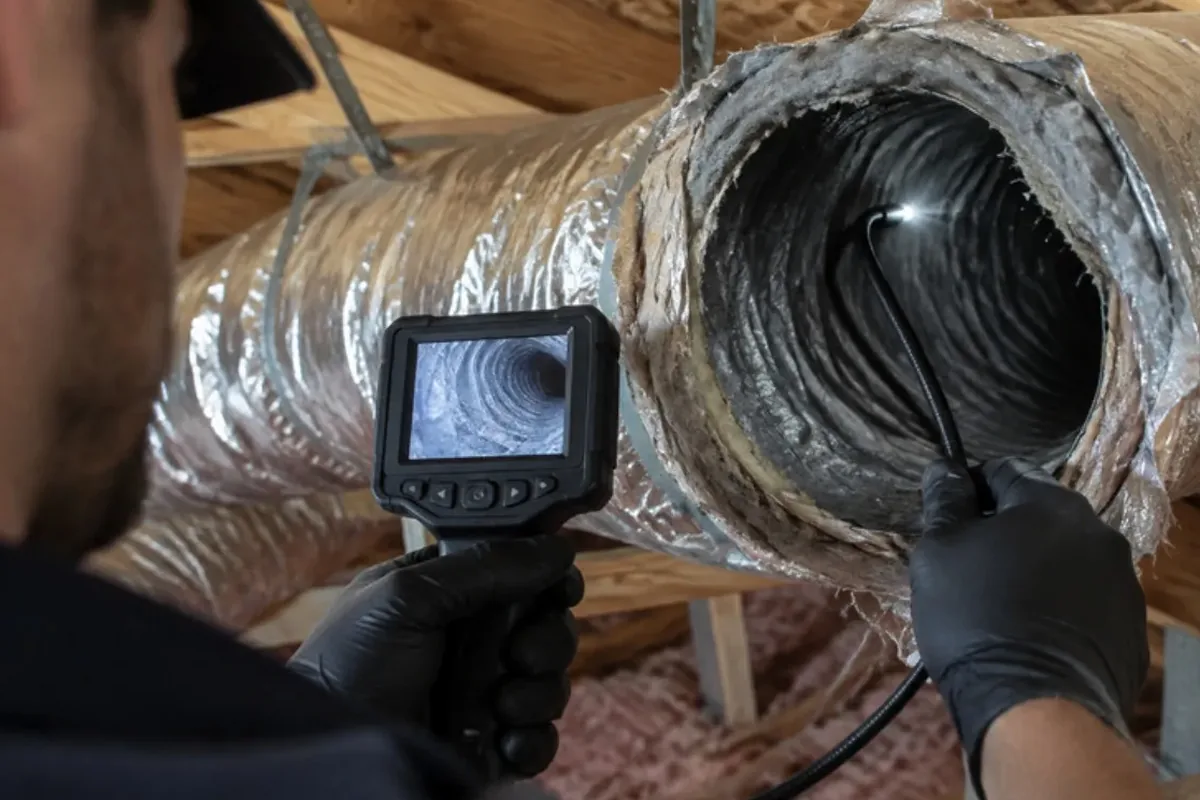
Is it the ducts or the room?
Compare. If the smell is strongest at the registers and fades a few feet away, the system is the likely source. If it is strongest in one corner, a wall or floor may be the cause. A company can tell which by opening the unit up.
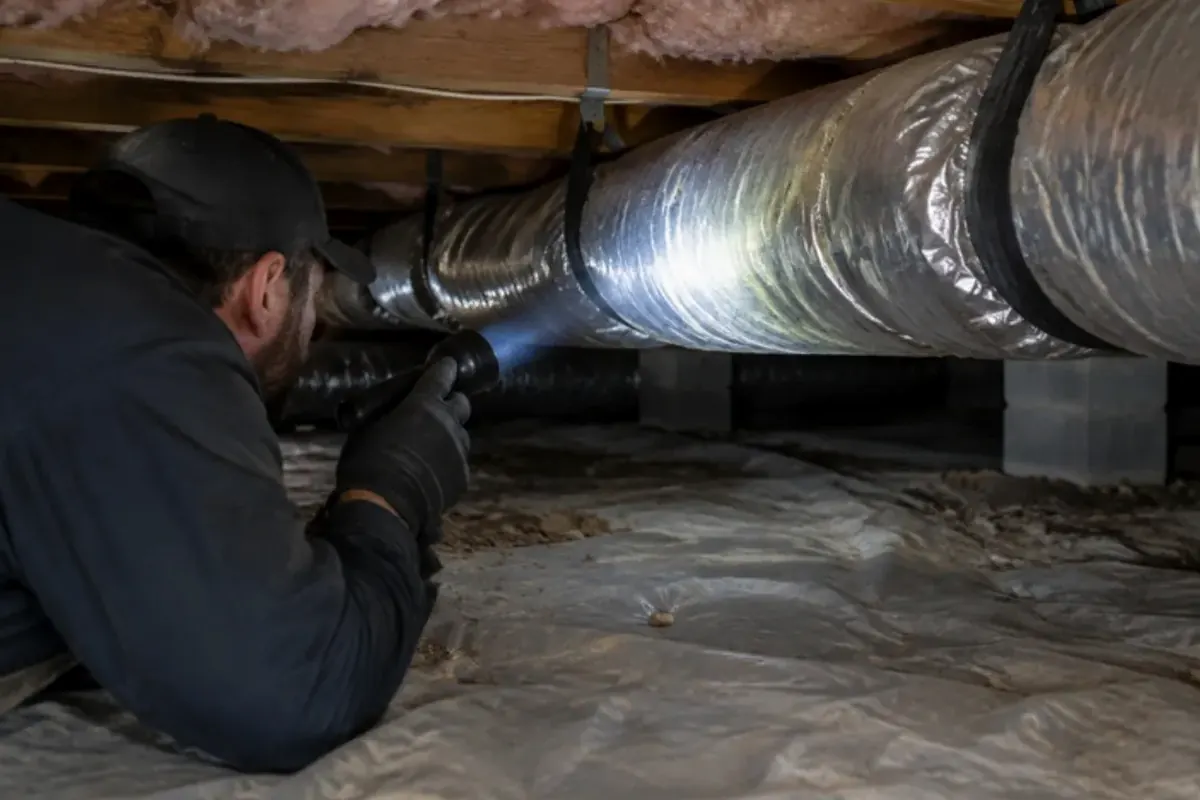
Return leaks pull in damp air
Gaps in a return duct draw air from wherever the duct sits. In a damp crawl space or a humid attic, that means moisture and dirt go straight into the system. The result is a damp filter box, coated coil fins and a smell that never quite clears.
Low ground along creeks near Smithfield holds moisture, so a heat pump in a nearby crawl space may sweat more than one on higher, drier land.
Why two quotes can differ
One company may price only the surface cleaning, while another includes sealing, replacing damaged runs and handling the wet insulation around them. Ask each to put the scope in writing so you can compare the same work, not just the bottom line.
Who to check with in Smithfield
Home repair complaints in North Carolina can go to the Department of Justice consumer protection line, 1-877-5-NO-SCAM. Settle the scope in writing first so there is something to point to.
Tenants should put leak and mold complaints in writing. North Carolina's landlord statute, G.S. 42-42, covers repairs needed to keep a rental fit to live in.
Permits for Smithfield addresses are handled by Johnston County Building Inspections; ask there before load-bearing framing or duct runs are replaced.
Flood water and a burst pipe are usually treated differently by insurers; the state's FRIS flood maps show whether a lot sits in a mapped flood zone.
Help is also available nearby in Selma, Four Oaks and Clayton.
Questions worth asking
- Where is the moisture coming from?
- Which parts can be cleaned and which replaced?
- How will the work area be sealed off?
- Will the system be off, and for how long?
- What will be in writing?
Keep indoor humidity in range
EPA suggests keeping indoor humidity below about 60 percent, ideally 30 to 50. A basic hygrometer from a hardware store shows where the house sits. If readings stay high with the AC running, a dehumidifier or a system adjustment may be worth discussing.
HVAC & Duct Mold Removal questions in Smithfield
Can mold really grow inside HVAC ducts?
Where does the smell usually come from?
Do I need to replace my ducts?
Is mold in my ducts a health risk?
More mold services in Smithfield
HVAC & Duct Mold Removal nearby
Helpful guides
Sources
- Johnston County Building Inspections Department
- Johnston County Building Inspections Department: flood information
- N.C. General Statutes 87-1: general contractor license
- NC Licensing Board for General Contractors: consumer FAQ
- NC Division of Public Health: choosing a mold consultant
- N.C. General Statutes 42-42: landlord to provide fit premises
- NC Flood Risk Information System
Last updated: