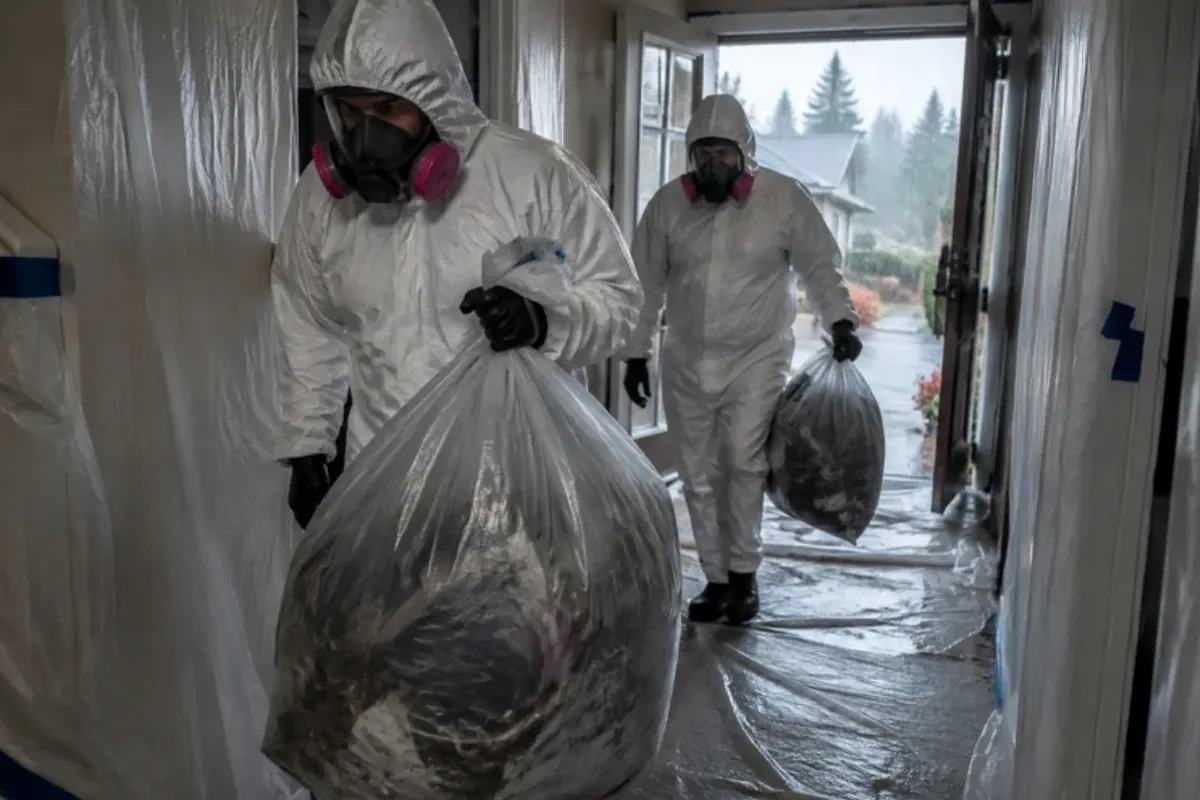
Porous materials such as soaked drywall, ceiling tile and insulation that stay moldy usually have to be removed, while framing and hard surfaces are cleaned. That follows EPA guidance and shapes most work plans. Call the number on this page to be connected with a local mold company in Coats.
Isn't it just scrubbing?
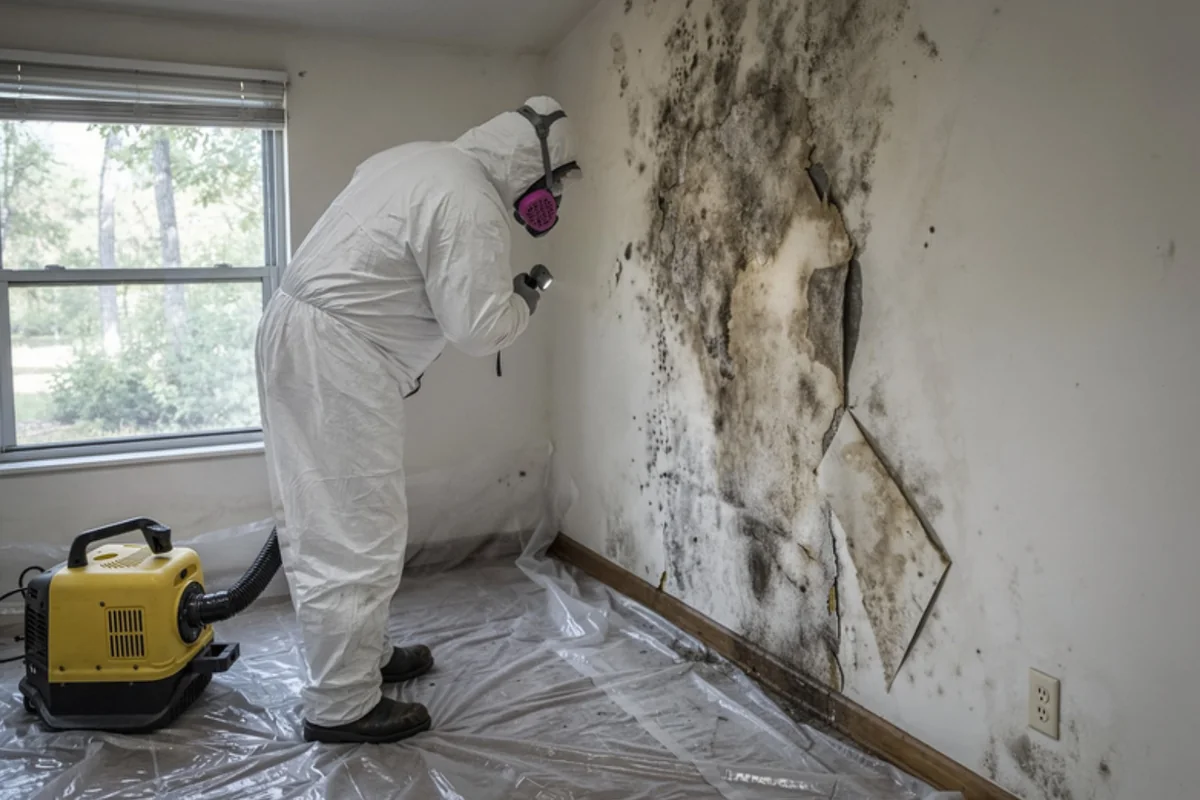
Not really. Scrubbing a stain off a wall leaves spores and damp material behind it. The work is mostly removal of soaked layers, HEPA vacuuming, detailed cleaning of framing and then drying, with the surface scrub being the smallest piece.
The first hours of a job look more like demolition than cleaning, and that is normal.
Vented crawl spaces take the blame
Most houses in this part of Harnett County sit over a vented crawl space. Summer air is warm and soaked with moisture, and when it meets cooler ducts and floor framing, water condenses. Years of that leaves stained joists and damp insulation.
Ducts and floor framing take the brunt, and damp insulation holds the moisture against the wood.
Rural properties often include well houses, barns and older outbuildings alongside the home. Mold can start in any of them, so make sure the quote spells out which structures are covered.
Insurance sometimes enters the picture
If the moisture came from a sudden event such as a burst pipe, your homeowner policy may respond, but policies vary a great deal and gradual leaks are often excluded. Call your carrier early and keep photos and receipts for everything.
Everything depends on the cause, the speed of the response and how far the damage spread.
Rules and offices for Coats mold jobs
There are no federal rules for indoor air quality consultants, so references, written scopes and a separate assessor matter. Contractor license rules start at $40,000 in North Carolina.
Renting? N.C.G.S. 42-42 requires landlords to keep a home fit and habitable and to repair supplied plumbing and heating; outside an emergency, send the repair request in writing.
Permits for Coats addresses are handled by the local building department; ask there before load-bearing framing or duct runs are replaced.
If creek or river water came inside, look the address up in North Carolina's Flood Risk Information System and call your insurer before cleanup begins.
Many of the same companies also take calls from Fuquay-Varina, Angier and Willow Spring.
Keep testing separate
The NC Division of Public Health advises against hiring a consultant who also does the cleanup, and against leaning on air sampling as a first step. A different party doing the final check gives you a neutral read on the work.
Keep the checks independent and the paperwork in writing, so any problem can be traced back.
Time matters
EPA advises drying wet materials within 24 to 48 hours. Past that window, growth can start in drywall, carpet pad and insulation. If the water event was recent, drying equipment quickly may save materials that would otherwise have to come out.
Ask for any sampling or testing to be done by someone other than the company doing the cleanup.
Mold Removal & Remediation questions in Coats
Do I need to fix the leak first?
Does a company need a license for mold work in North Carolina?
Will the company repair or rebuild the walls?
How are crawl space jobs different?
More mold services in Coats
Mold Removal & Remediation nearby
Helpful guides
Sources
- N.C. General Statutes 87-1: general contractor license
- NC Licensing Board for General Contractors: consumer FAQ
- NC Division of Public Health: choosing a mold consultant
- N.C. General Statutes 42-42: landlord to provide fit premises
- NC Flood Risk Information System
- EPA: A Brief Guide to Mold, Moisture and Your Home
Last updated: