Wake Forest has an old college-town core and a mill village alongside newer development, so mold causes range from aging wood framing to modern HVAC trouble. We are a free referral service, not a mold company. Call the number on this page to be connected with a local mold company in Wake Forest.
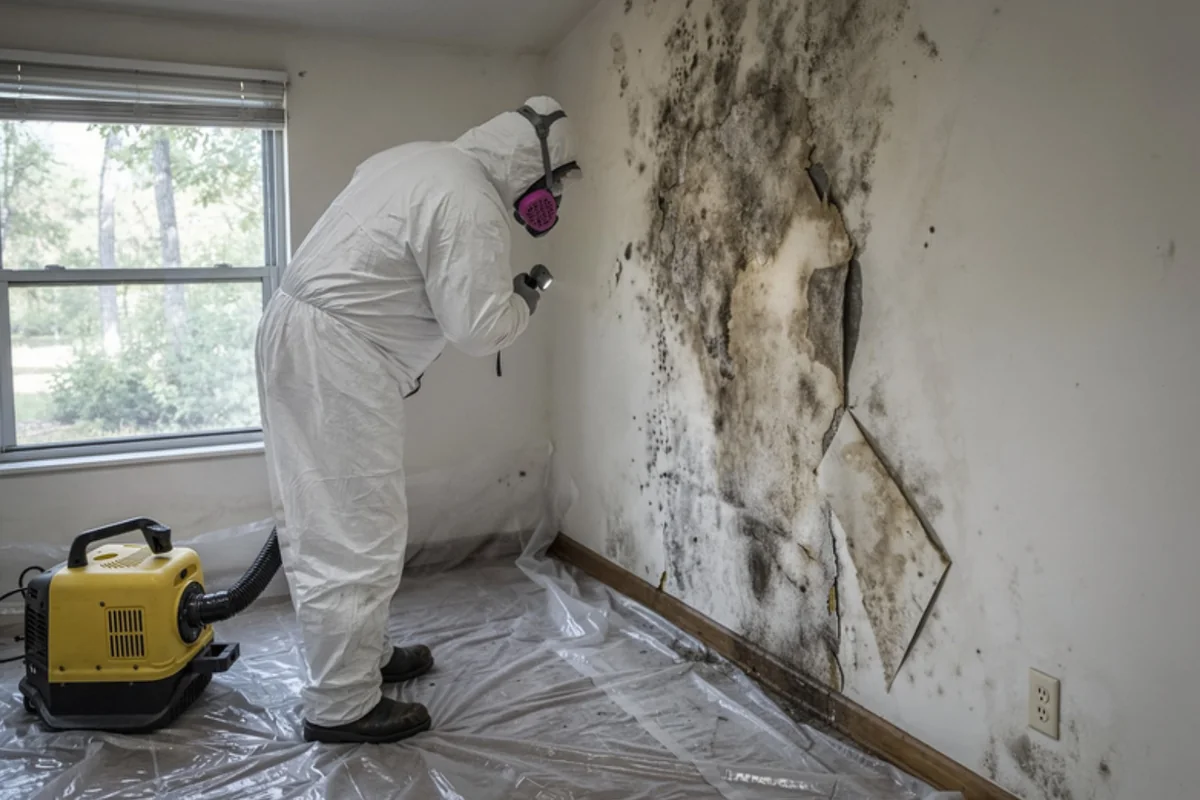
Mold services in Wake Forest
Historic core, mill village
The town's historic core surrounds the former Wake Forest College campus and a downtown commercial district. North Main Street has its historic district, South White Street and East South Avenue carry the downtown, and Southeastern Baptist Theological Seminary occupies the old campus. The Glen Royall Mill Village has housing going back to 1900, which means older wood-frame stock sits right in the middle of town.
Those mill-era houses were built with raised floors, wall vents and lumber that has been through more than a century of Carolina summers. They can be lovely and sturdy, but old sills, damp piers and original rooflines give moisture many routes in. Newer houses on the outskirts have a different issue set, including air handlers in attics and builder-grade bath fans.
Reading the signs
Pay attention to a few clues before you call:
- A musty smell that gets stronger when the heat pump runs.
- Floors that feel soft or cup near an exterior wall.
- Dark speckling on the underside of attic sheathing near bath fan ducts.
- Peeling paint or bubbling drywall below a window.
Our attic mold and mold in walls pages show what companies typically find in each case.
Working with a company
The call goes to an independent business that serves the area. Good ones will look for the water first. The NC Division of Public Health recommends asking questions, checking trade-group membership and industry guidelines, and not hiring an assessor who also performs remediation. EPA adds that sampling is typically unnecessary when mold is visible.
Inspections and license rules
The Inspections Department of the Town of Wake Forest handles building permits and can be reached at 919-435-9531. State law, G.S. 160D-1110, exempts many repairs of $40,000 or less on single-family homes from a building permit, but not work that changes plumbing, heating, cooling or electrical systems, or touches load-bearing structure. In an old mill house, rotted framing might fall into that last category, so confirm with the department.
North Carolina requires a general contractor license at $40,000 and above under G.S. 87-1. Look the company up through the NC Licensing Board for General Contractors, which searches by name, license number or county.
Before you call
Snap a few photos, note when the smell began, and mention whether you have had recent storms or plumbing work. Those details help a company decide whether to start in the crawl space, the attic or behind a wall. If the house is in the older part of town, say so, because raised floors and original framing change how a crew plans the work.
Tenants
Renters are covered by G.S. 42-42, which requires landlords to maintain fit and habitable premises and to fix imminently dangerous conditions after notice. Put your request in writing.
Common questions in Wake Forest
How old is the Glen Royall Mill Village?
Who issues permits for repairs in Wake Forest?
Should the inspector and remover be the same company?
What if my landlord ignores a mold complaint?
Nearby cities and towns
Sources
- Town of Wake Forest: historic districts
- Town of Wake Forest: Inspections
- EPA: A Brief Guide to Mold, Moisture and Your Home
- G.S. 160D-1110, building permit exemption
- NC Licensing Board for General Contractors: consumer FAQ
- G.S. 87-1, general contractor license
- NC Division of Public Health: choosing a mold consultant
- G.S. 42-42, landlord duties
Last updated: