Your heating and cooling contractor and a mold company do different work. One repairs or replaces equipment, the other removes growth and finds the moisture source, and larger jobs often need both in the right order. Call the number on this page to be connected with a local mold company in Chapel Hill.
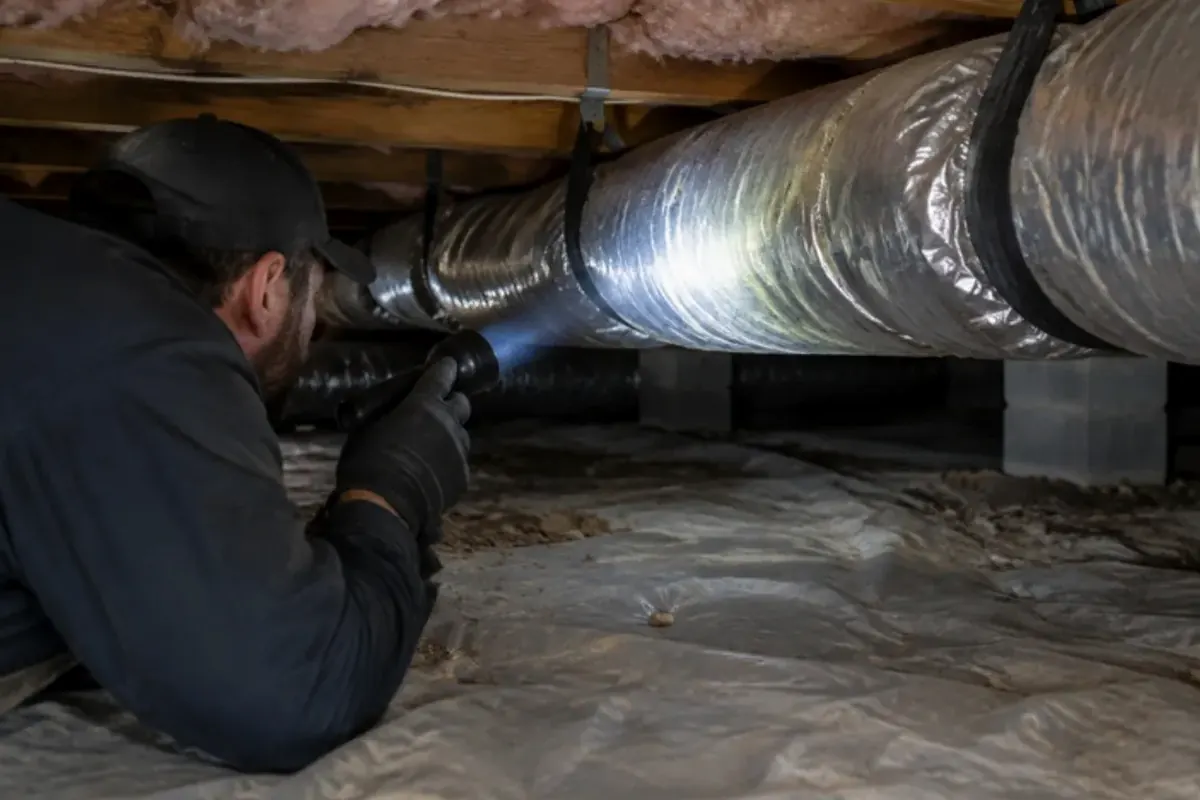
Clues near the air handler in Chapel Hill
Open the closet or crawl space hatch and look at the cabinet. Standing water in the pan, a slimy drain line, corrosion on the base or a fuzzy film on the coil edge each suggest the unit has been wet for a while. Take a photo before you call.
Hot attics, cold ducts
An attic can run far hotter than the living space, and the supply ducts inside it run far colder. The temperature gap makes wrap and board sweat. Leaky seams and torn vapor jackets make the problem worse, and wet insulation sits there for weeks.
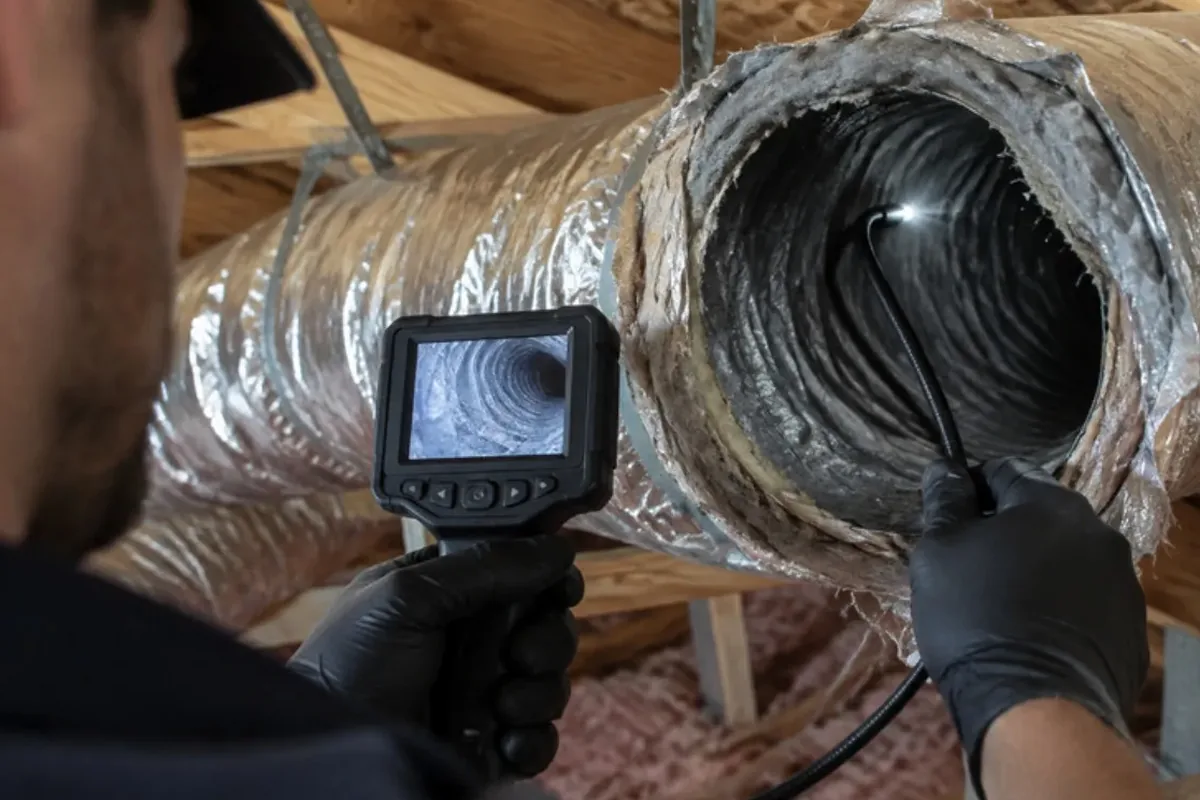
Why two quotes can differ
One company may price only the surface cleaning, while another includes sealing, replacing damaged runs and handling the wet insulation around them. Ask each to put the scope in writing so you can compare the same work, not just the bottom line.
What the visit usually involves
Expect a look at the air handler, drain line, pan and accessible ducts, often with a flashlight, a moisture meter and a camera. The company should explain where the water comes from before it talks about cleaning, and should show you what it finds.
Seal and insulate the ducts
Sealed seams and intact insulation jackets keep humid air from touching cold metal. In a crawl space, ask an HVAC contractor about mastic on joints and whether a closed crawl space with a dehumidifier suits the house. Small gaps matter more than most owners expect.
Who to check with in Chapel Hill
North Carolina ties larger jobs to the general contractor license: under G.S. 87-1, a project costing $40,000 or more needs a contractor holding a license from the NC Licensing Board for General Contractors.
Tenants should put leak and mold complaints in writing. North Carolina's landlord statute, G.S. 42-42, covers repairs needed to keep a rental fit to live in.
Cleanup on its own rarely needs a permit. Replacing framing, wiring, ductwork or plumbing afterward can, and the Town of Chapel Hill building and development services office can tell you what applies.
If creek or river water came inside, look the address up in North Carolina's Flood Risk Information System and call your insurer before cleanup begins.
Many of the same companies also take calls from Carrboro, Durham and Morrisville.
Around Chapel Hill
Calls come in from across Chapel Hill, including Southern Village, Chapel Hill Northside, The Shire.
The Town's flood page lists areas that flood during heavy rain, including Bolin Creek when it leaves its banks, S. Estes Drive, Cleland Road and parts of Franklin Street, and advises avoiding parking in the floodplain.
HVAC & Duct Mold Removal questions in Chapel Hill
Where does the smell usually come from?
Who fixes the equipment itself?
Can my landlord ignore mold in the HVAC?
Does insurance cover duct mold?
More mold services in Chapel Hill
HVAC & Duct Mold Removal nearby
Helpful guides
Sources
- Town of Chapel Hill Building Permits and Inspections
- Town of Chapel Hill Building Permits and Inspections: flood information
- N.C. General Statutes 87-1: general contractor license
- NC Licensing Board for General Contractors: consumer FAQ
- NC Division of Public Health: choosing a mold consultant
- N.C. General Statutes 42-42: landlord to provide fit premises
- NC Flood Risk Information System
Last updated: