After a flood, mold can start growing on wet materials within a day or two. EPA advises drying everything within 24 to 48 hours, and porous items that stay soaked, like carpet, pad and insulation, usually have to be discarded. Call the number on this page to be connected with a local mold company in Wake Forest.
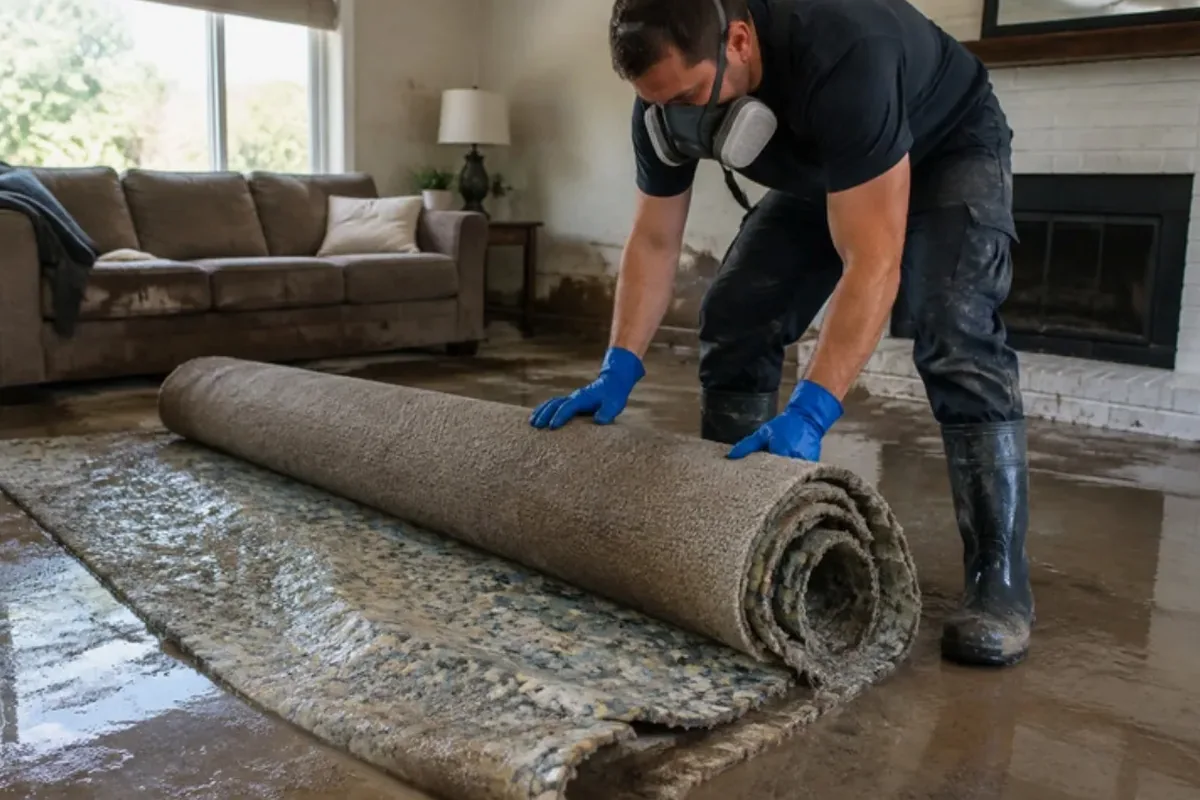
What to do while you wait for help
- Photograph every wet room and item.
- Turn off power to flooded areas if safe.
- Move belongings to dry spots.
- Start air movement and dehumidifiers.
Skip bleach; EPA does not generally recommend it for routine cleanup. Photos also help any insurance claim later.
Slab homes and sloped lots
Newer subdivisions around Youngsville often sit on slabs, where floodwater enters at door thresholds and wicks into drywall. Sloped lots with finished lower levels take on runoff from uphill, and those walk-out rooms hold the moisture. Those lower rooms often stay damp long after the rain ends.
Low ground along creeks floods first in a storm and drains last, so lakeside and creekside houses often remain damp long after neighbors on higher lots have dried out.
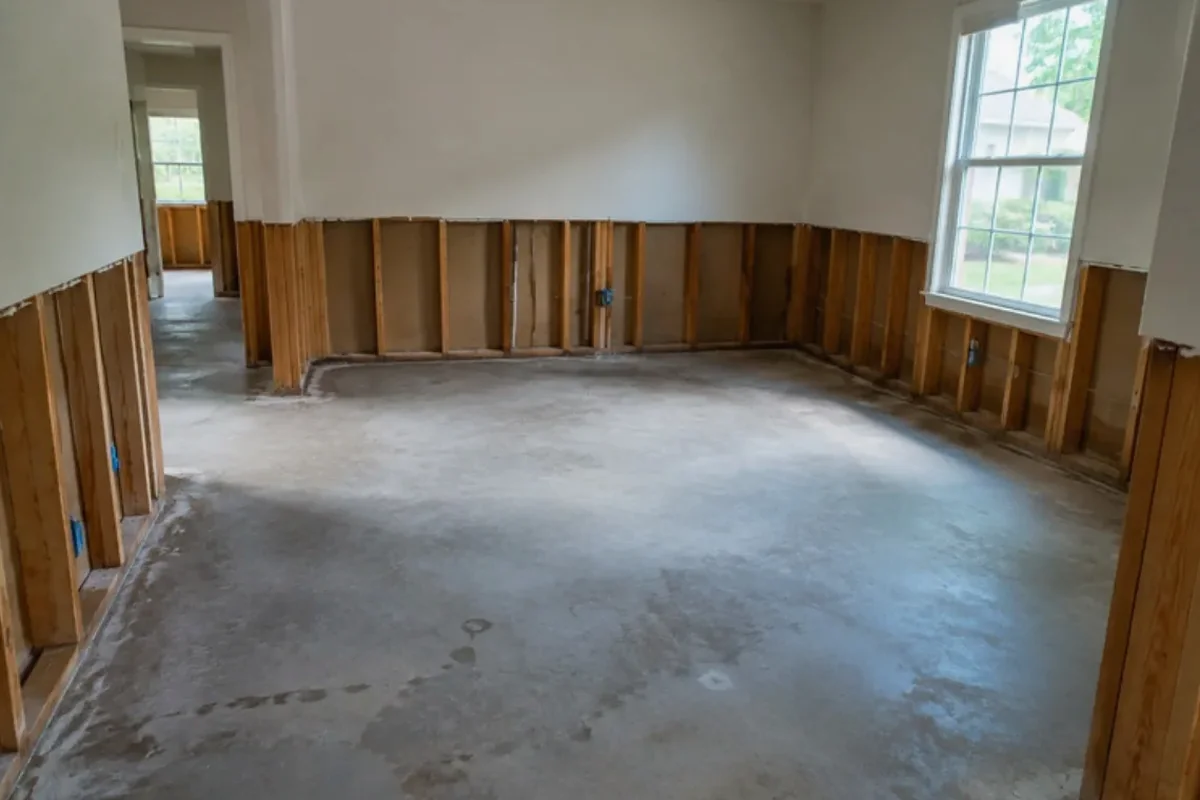
Access and house type
A crawl space with room to work costs less to clean than one with ducts, pipes and tight corners. Finished walk-out lower levels, tile, built-ins and cabinets also raise the work because each must come apart before it can dry. Tight spaces mean slower, harder work.
Who to check with in Wake Forest
For a big tear-out and rebuild, look the company up on the NC Licensing Board for General Contractors site; its search works by name, number or county, and a license is required at $40,000 and up.
Tenants should put leak and mold complaints in writing. North Carolina's landlord statute, G.S. 42-42, covers repairs needed to keep a rental fit to live in.
Under G.S. 160D-1110, many repairs of $40,000 or less in a house need no permit, but structural, plumbing, electrical and HVAC changes do. Check with the Town of Wake Forest Inspections Department.
Flood water and a burst pipe are usually treated differently by insurers; the state's FRIS flood maps show whether a lot sits in a mapped flood zone.
Help is also available nearby in Youngsville, Rolesville and Franklinton.
After the dry-down
Once readings show materials are dry, rebuilding can begin: insulation, drywall, trim and flooring. Some homeowners request independent clearance testing before closing up walls, which is reasonable on a big job and worth discussing with the company. Ask for a drying log showing each day's readings.
If you rent
Tenants who see storm damage should give the landlord written notice quickly. North Carolina G.S. 42-42 expects landlords to keep a rental fit and habitable. Photos of wet floors and walls support your request while repairs are arranged. Keep every photo, invoice and report in a single folder.
Getting to know Wake Forest
Calls come in from across Wake Forest, including North Main Street historic district, Glen Royall Mill Village, South White Street (downtown).
The Glen Royall Mill Village Historic District has housing built starting in 1900, so older wood-frame stock sits in the town core.
Storm & Flood Mold Removal questions in Wake Forest
Is floodwater treated differently from a pipe leak?
Does homeowners insurance cover flood mold in Wake Forest?
Should I test the air after a flood?
Does a heavy tropical rain count as a flood?
More mold services in Wake Forest
Storm & Flood Mold Removal nearby
Helpful guides
Sources
- Town of Wake Forest Inspections Department
- Wake County Permits and Inspections: flood information
- N.C. General Statutes 87-1: general contractor license
- NC Licensing Board for General Contractors: consumer FAQ
- NC Division of Public Health: choosing a mold consultant
- N.C. General Statutes 42-42: landlord to provide fit premises
- NC Flood Risk Information System
Last updated: