Spots under about 10 square feet are the size EPA says a homeowner can usually handle, and commercial spaces involve staff, customers and larger systems. Most business owners and managers are better off with a company that can contain the area and handle the waste. Call the number on this page to be connected with a local mold company in Wake Forest.

Do not wait for the next lease cycle
Moisture problems grow as long as materials stay damp. Drying wet material within 24 to 48 hours is the EPA target, and a slow leak can soak a lot of drywall in that time. Early calls tend to mean smaller work areas, fewer closed rooms and a shorter rebuild afterward.
Storms and standing water
Heavy rain and tropical remnants push water through roofs, doors, loading docks and low parking areas, and creeks near Youngsville can rise onto ground-level space. After a wet week, check carpets, baseboards and storage on the lowest floor, even if nothing looks wet.
Buildings near a river, creek or lake around Wake Forest sit on damp ground, and after heavy rain, ground-level storerooms and low parking areas can take on water.
Why written scopes matter
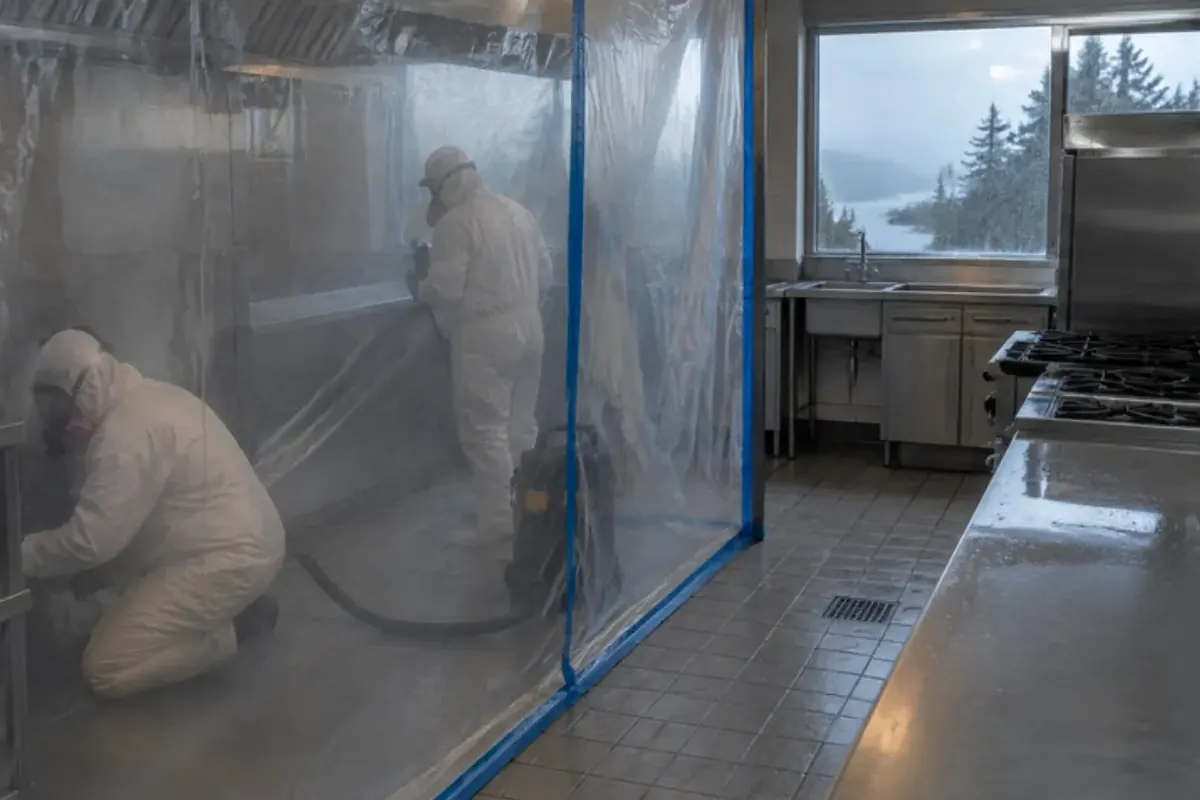
Two commercial bids can look far apart because one covers only surface cleaning and the other includes demolition, containment and disposal. Request a written scope from each company so you compare the same work, and ask what is excluded, such as rebuild, permits or disposal fees.
Before you hire in Wake Forest
For a big tear-out and rebuild, look the company up on the NC Licensing Board for General Contractors site; its search works by name, number or county, and a license is required at $40,000 and up.
Renting? N.C.G.S. 42-42 requires landlords to keep a home fit and habitable and to repair supplied plumbing and heating; outside an emergency, send the repair request in writing.
Cleanup on its own rarely needs a permit. Replacing framing, wiring, ductwork or plumbing afterward can, and the Town of Wake Forest Inspections Department can tell you what applies.
Flood water and a burst pipe are usually treated differently by insurers; the state's FRIS flood maps show whether a lot sits in a mapped flood zone.
Callers here are often matched with companies that work in Youngsville, Rolesville and Franklinton as well.
Planning around business hours
Decide early what must stay open. Retail may want evening work, a clinic may need a section sealed, and an office may move staff for a few days. A good plan names the dates, the noise, the deliveries and the areas that will be off limits, so staff and customers are not surprised.
Respond to every complaint
Set up a simple way for employees and tenants to report leaks and smells, with a name and a date, and track what happens with each one. A written log helps with insurance, with lease disputes and with finding patterns, like a repeated problem in the same corner.
Around Wake Forest
Calls come in from across Wake Forest, including North Main Street historic district, Glen Royall Mill Village, South White Street (downtown).
The Glen Royall Mill Village Historic District has housing built starting in 1900, so older wood-frame stock sits in the town core.
Commercial Mold Remediation questions in Wake Forest
Is testing required for a commercial job?
What should I do first if I find mold in my building?
Should the assessor and the remediator be different?
Is Wake Forest building permit paperwork needed?
More mold services in Wake Forest
Commercial Mold Remediation nearby
Helpful guides
Sources
- Town of Wake Forest Inspections Department
- Wake County Permits and Inspections: flood information
- N.C. General Statutes 87-1: general contractor license
- NC Licensing Board for General Contractors: consumer FAQ
- NC Division of Public Health: choosing a mold consultant
- N.C. General Statutes 42-42: landlord to provide fit premises
- NC Flood Risk Information System
Last updated: