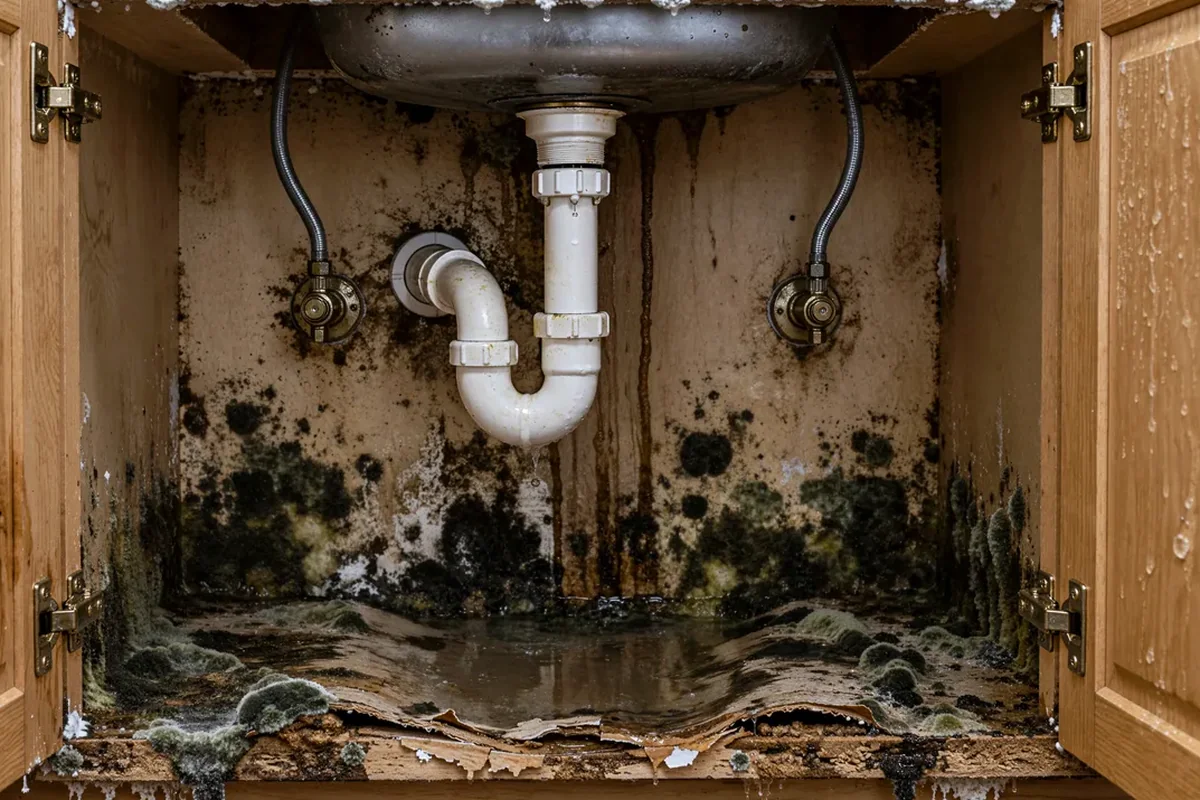
Mold after a leak grows on whatever stayed damp, usually drywall paper, insulation, carpet pad and the bottom of baseboards. EPA advises drying wet materials within 24 to 48 hours, and porous items that stay moldy typically have to come out. Call the number on this page to be connected with a local mold company in Bahama.
Check these spots first
- Ceiling beneath an upstairs bathroom
- Wall behind the dishwasher and sink
- Closet around the water heater
- Floor near the washing machine hose
Soft, discolored or musty-smelling material at any of them is a reason to call. Homes with older fixtures tend to show trouble in these places first.
Bathrooms, kitchens and laundry rooms
Most leak mold begins in wet rooms: a failed shower pan, a loose supply under the sink, a toilet seal that weeps. Behind tile and cabinets, the damp lingers, and the room fan rarely clears moisture inside a closed cavity. Check under the vanity for staining or warped wood.
Near the lakes and rivers, high groundwater means a leak under the floor drains slowly, so wet subfloor and insulation in lakeside houses can stay saturated for weeks.
Homes far from city services depend on a well pump and pressure tank, and when a line fails the pump keeps running and feeding the leak until someone notices the water bill or the damp wall.
Plumbing repair is a separate line
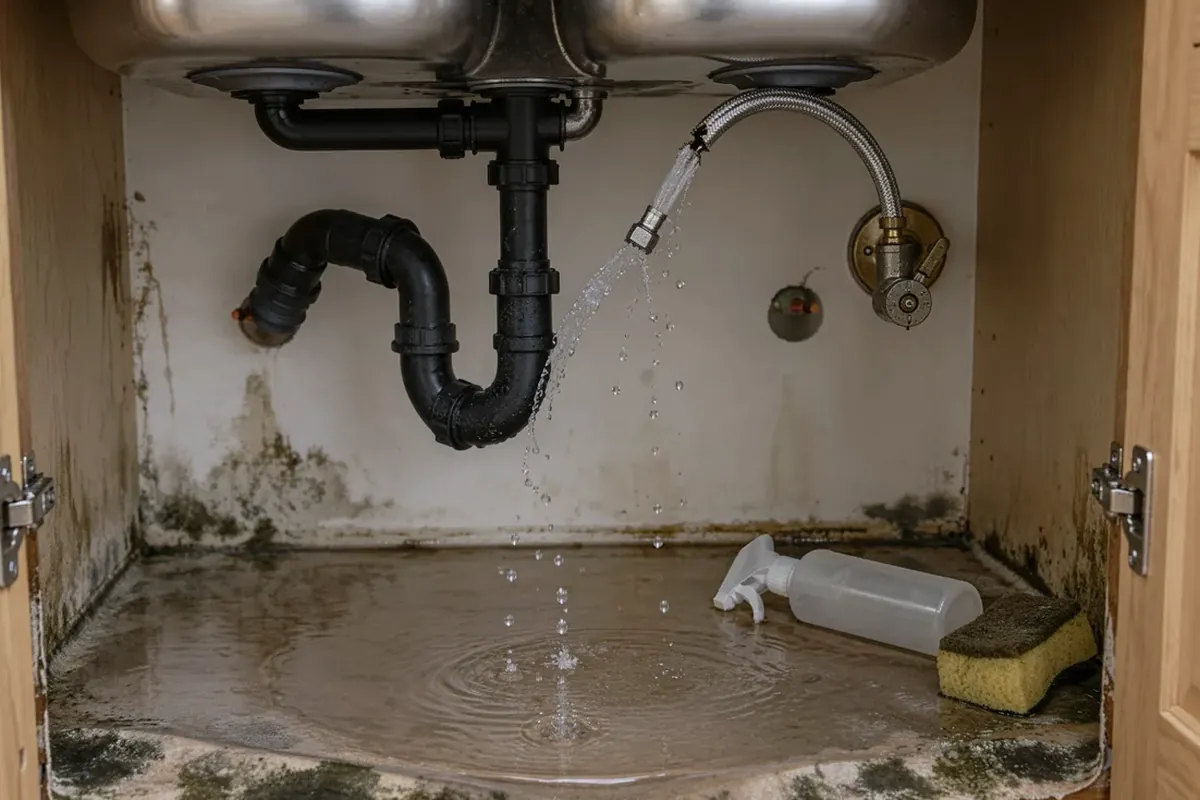
Mold work does not fix the pipe. Budget for the plumber, the drying and mold work, and the rebuild as three distinct pieces. Getting them itemized keeps surprises down and lets you handle each step with the right trade in Durham County. Keep the paperwork together.
Tracing moisture, not just mold
A good crew checks wet readings beyond the visible stain, since water travels. Thermal cameras and pin meters help map the damp zone so cutting stays limited to materials that cannot be saved, rather than opening walls at random. Less cutting means less rebuilding afterward.
Before you hire in Bahama
Be wary of anyone who wants air sampling as the very first step. North Carolina's public health guidance warns about exactly that, and suggests asking plenty of questions before you pay.
In a rental, written notice to the landlord starts the clock under state law, which requires repairs that keep the unit in a fit and habitable condition.
Under G.S. 160D-1110, many repairs of $40,000 or less in a house need no permit, but structural, plumbing, electrical and HVAC changes do. Check with the Durham City-County Inspections Department.
Flood water and a burst pipe are usually treated differently by insurers; the state's FRIS flood maps show whether a lot sits in a mapped flood zone.
Many of the same companies also take calls from Durham, Butner and Stem.
The 24 to 48 hour window
EPA advises drying wet materials within a day or two. After that, spores already present on drywall paper and wood framing get the moisture they need to colonize. Fast water removal is easier and gentler than any cleanup that comes later. Hurrying early pays off later.
Leak & Burst Pipe Mold Removal questions in Bahama
How fast does mold grow after a pipe leak?
Who do I call first, a plumber or a mold company?
What gets thrown out after a leak?
How do I choose a company for a big job?
More mold services in Bahama
Leak & Burst Pipe Mold Removal nearby
Helpful guides
Sources
- Durham City-County Inspections Department
- N.C. General Statutes 87-1: general contractor license
- NC Licensing Board for General Contractors: consumer FAQ
- NC Division of Public Health: choosing a mold consultant
- N.C. General Statutes 42-42: landlord to provide fit premises
- NC Flood Risk Information System
- EPA: A Brief Guide to Mold, Moisture and Your Home
Last updated: