North Carolina rental law expects a landlord to keep the home fit and habitable once the tenant gives written notice. Tenants with a damp, moldy wall should document it in writing. Call the number on this page to be connected with a local mold company in Willow Spring.
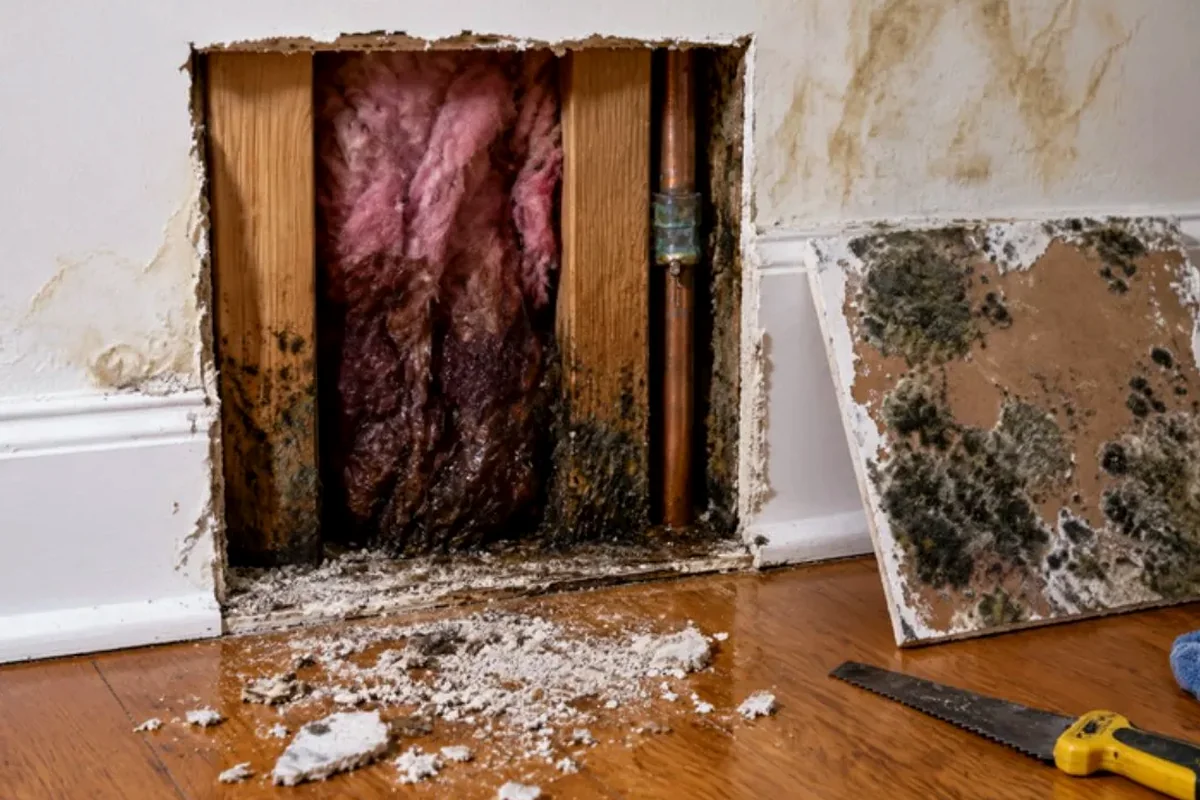
Stains that keep returning
A brown ring that reappears after primer, or a dark patch that creeps back within weeks, tells you the source is still active. Coverings only hide it. The water path has to be found first, then the wall dried, and only then does fresh paint make sense.
Plumbing inside the wall
Supply lines, drain connections and shower valves hide behind drywall. A slow weep from a fitting can soak insulation for months. The first sign may be a stain at the baseboard below or a dehumidifier that never seems to catch up.
On larger lots, downspouts may drain toward the house and farmhouses can have walls that sit close to damp ground. Mold in these walls often turns up in mudrooms, laundry areas and old porch conversions.
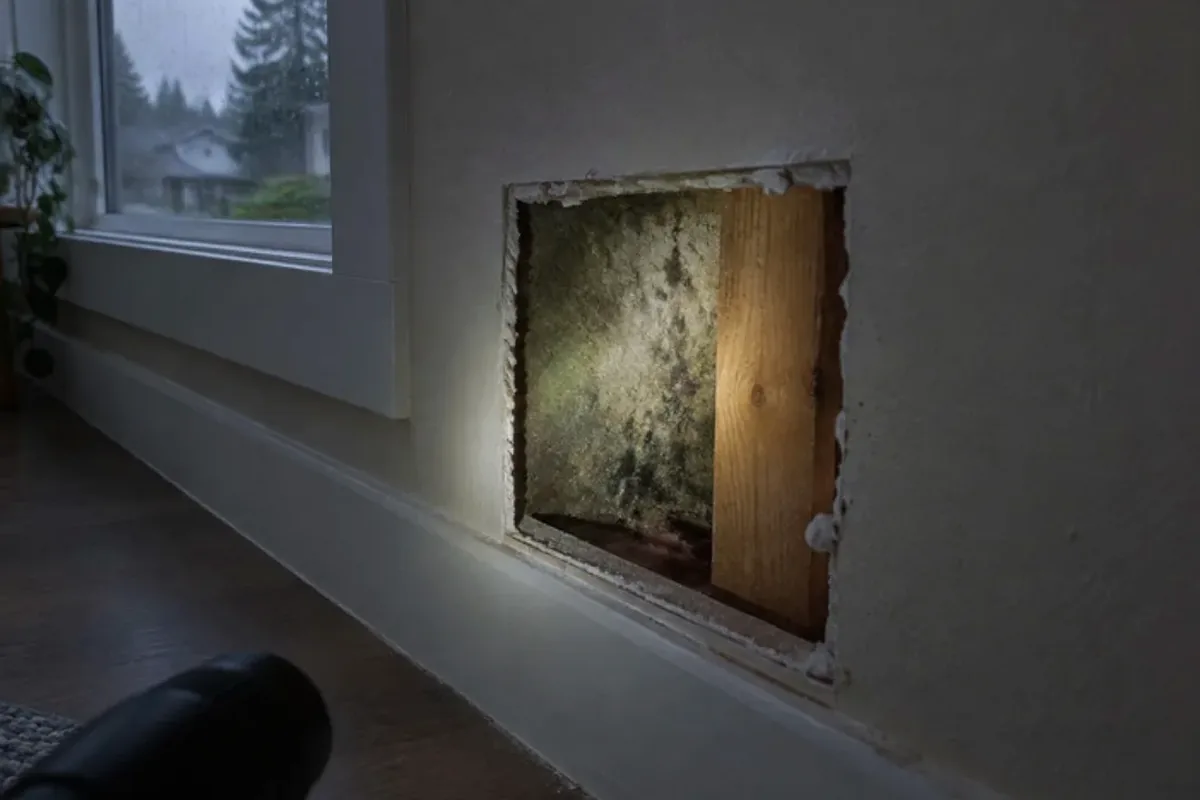
Large projects and licenses
A full project that reaches $40,000 or more needs a contractor holding a general contractor license from the state. The NCLBGC site has a lookup. For smaller wall repairs, references and a detailed written scope carry more weight than a number alone.
Getting the house ready
Clear furniture away from the wall, pull valuables from nearby shelves and tell the company about pets, small children or anyone who wants extra care around dust. If health is a concern, talk with your doctor about whether to be away during the work.
Dry it fast
Time matters more than any product. EPA advises drying wet materials within 24 to 48 hours. If a pipe let go or water came in, shut it off, pull baseboards where possible, run fans and a dehumidifier, and call before the wall stays damp for days.
Local facts for a Willow Spring mold job
The NC Division of Public Health suggests not hiring a mold consultant who also sells the remediation, so the person who finds the problem isn't the one paid to fix it.
Tenants should put leak and mold complaints in writing. North Carolina's landlord statute, G.S. 42-42, covers repairs needed to keep a rental fit to live in.
Once the moldy material is gone, the rebuild is its own step, and some of it, like new ductwork or structural framing, may need sign-off from Wake County Permits and Inspections.
Flood water and a burst pipe are usually treated differently by insurers; the state's FRIS flood maps show whether a lot sits in a mapped flood zone.
Many of the same companies also take calls from Fuquay-Varina, Angier and Coats.
Mold in Walls questions in Willow Spring
Do I have to remove the drywall?
Can I just paint over the stain?
Is it safe to cut open the wall myself?
Should I test the air first?
More mold services in Willow Spring
Mold in Walls nearby
Helpful guides
Sources
- Wake County Permits and Inspections
- Wake County Permits and Inspections: flood information
- N.C. General Statutes 87-1: general contractor license
- NC Licensing Board for General Contractors: consumer FAQ
- NC Division of Public Health: choosing a mold consultant
- N.C. General Statutes 42-42: landlord to provide fit premises
- NC Flood Risk Information System
Last updated: