Wall drywall and insulation that stay moldy are porous and normally have to be cut out, since wiping the face does not reach the back. Studs can often be cleaned and dried. Call the number on this page to be connected with a local mold company in Holly Springs.
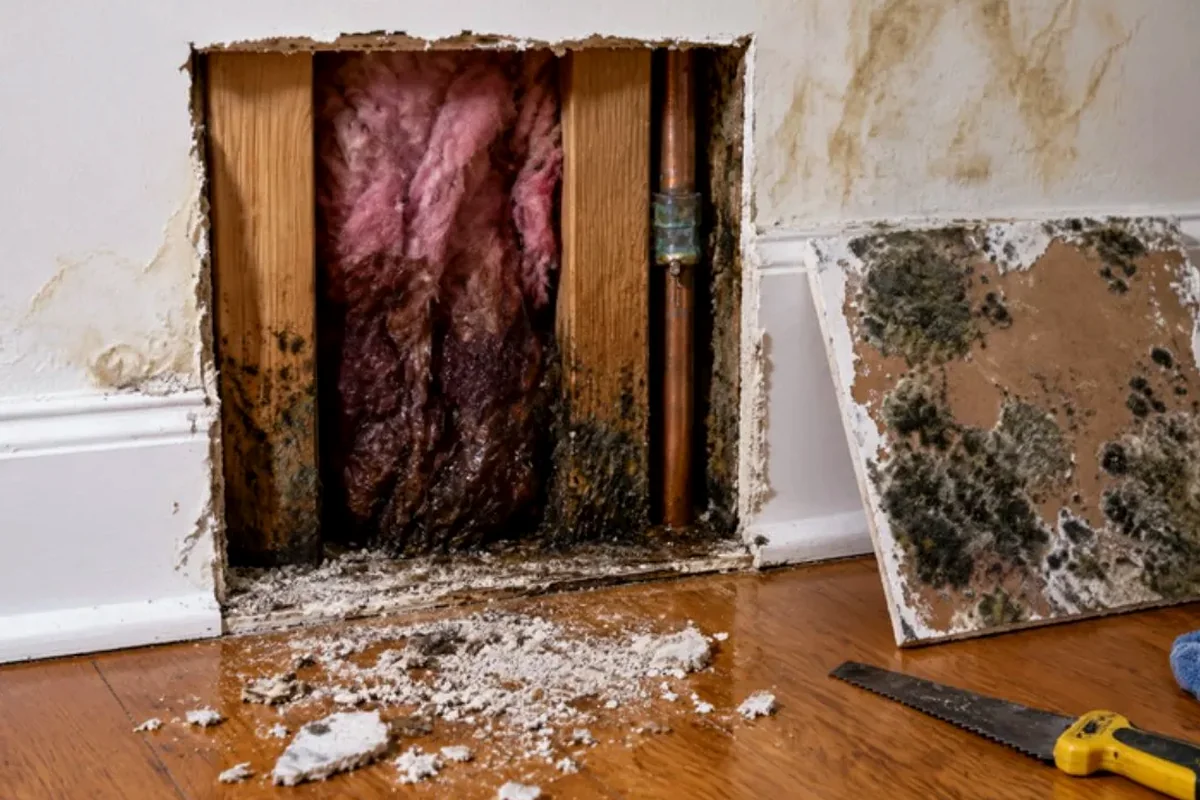
Where walls get wet
- Around tubs, showers and toilets.
- Below windows and exterior doors.
- Behind refrigerators and dishwashers.
- Along exterior walls near downspouts.
Those spots take the most punishment, so start the search there before cutting anywhere else.
Common sources in Triangle homes
- Pinhole or fitting leaks in supply lines.
- Failed window flashing or caulk.
- Sweating ducts running inside soffits and chases.
- Wet crawl space air wicking up the framing.
A company usually rules out these four before anything else.
Newer construction from the 2000s, as seen across Holly Springs, often uses pressed trim, paper-faced drywall and engineered siding that react badly to repeated wetting behind the surface.
Scope creep and change orders
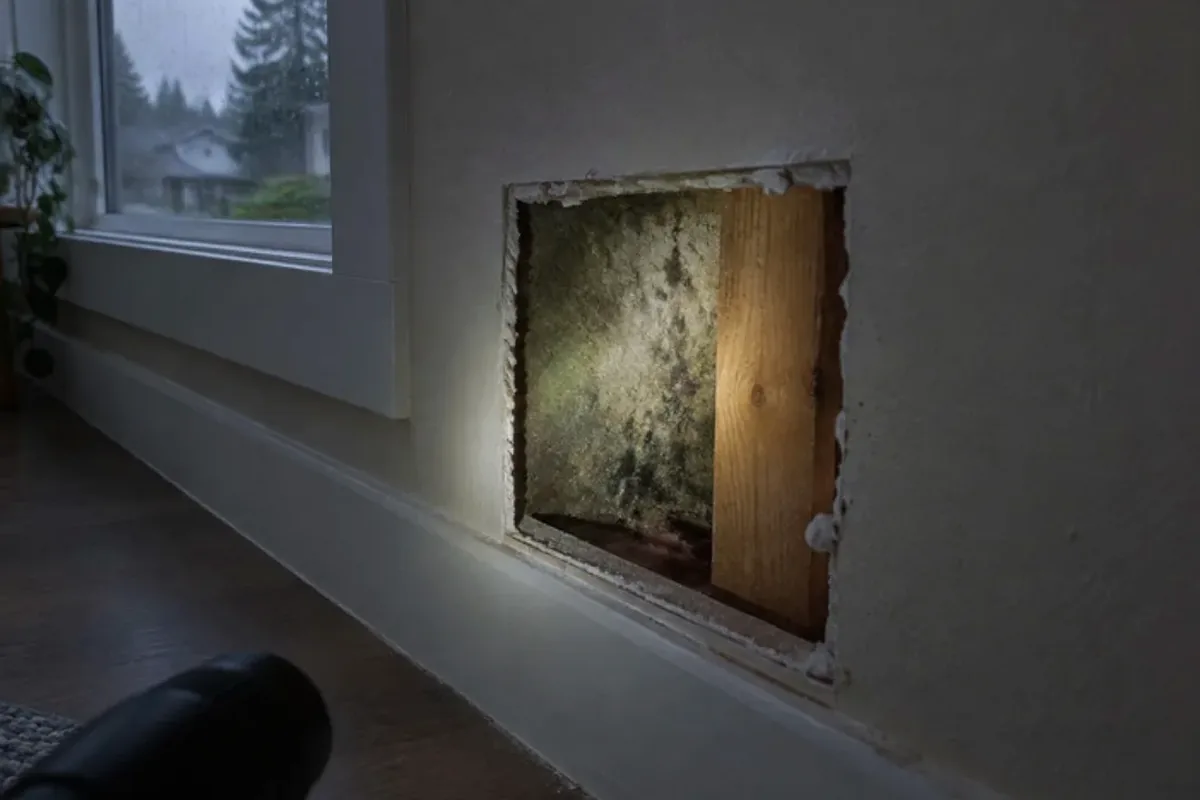
Once a wall opens, the company may find more wet material than expected. Ask how that is handled: a change order in writing, photos of what was found and a revised price before extra work begins protect both sides from surprises.
Holly Springs permits, rentals and contractor checks
For a big tear-out and rebuild, look the company up on the NC Licensing Board for General Contractors site; its search works by name, number or county, and a license is required at $40,000 and up.
Tenants should put leak and mold complaints in writing. North Carolina's landlord statute, G.S. 42-42, covers repairs needed to keep a rental fit to live in.
Permits for Holly Springs addresses are handled by the Town of Holly Springs Permits & Inspections office; ask there before load-bearing framing or duct runs are replaced.
After heavy Piedmont rain, the NC Flood Risk Information System is the place to check a property's flood zone before talking to the insurance company.
Many of the same companies also take calls from Apex, Fuquay-Varina and New Hill.
Before the wall is closed
Ask for moisture readings that show the studs are dry, and take photos of the open cavity. Closing a wall too early traps leftover dampness. Some homeowners add a clearance check by a separate assessor before the drywall goes back up.
Keep humidity down
Use bath fans during showers, run the kitchen hood while cooking and keep a hygrometer in the muggiest rooms. EPA suggests keeping indoor humidity below about 60 percent, ideally 30 to 50. Moving furniture a few inches off exterior walls helps air circulate.
Holly Springs at a glance
Calls come in from across Holly Springs, including NC 55, New Hill Road, Tallicud Road.
Floodplains make up about 17.3 percent of the Holly Springs planning area, along creeks including Middle Creek, Utley Creek and White Oak Creek.
Mold in Walls questions in Holly Springs
How do I know if there is mold inside my wall?
Can I just paint over the stain?
How long does it take for a wall to dry out?
Why do exterior walls in my house stay damp?
More mold services in Holly Springs
Mold in Walls nearby
Helpful guides
Sources
- Town of Holly Springs Permits & Inspections
- Wake County Permits and Inspections: flood information
- N.C. General Statutes 87-1: general contractor license
- NC Licensing Board for General Contractors: consumer FAQ
- NC Division of Public Health: choosing a mold consultant
- N.C. General Statutes 42-42: landlord to provide fit premises
- NC Flood Risk Information System
Last updated: