A flooded crawl space is easy to ignore because nobody goes down there, yet wet insulation and subfloor framing there can grow mold for weeks. Standing water is the signal to call. Call the number on this page to be connected with a local mold company in Wendell.
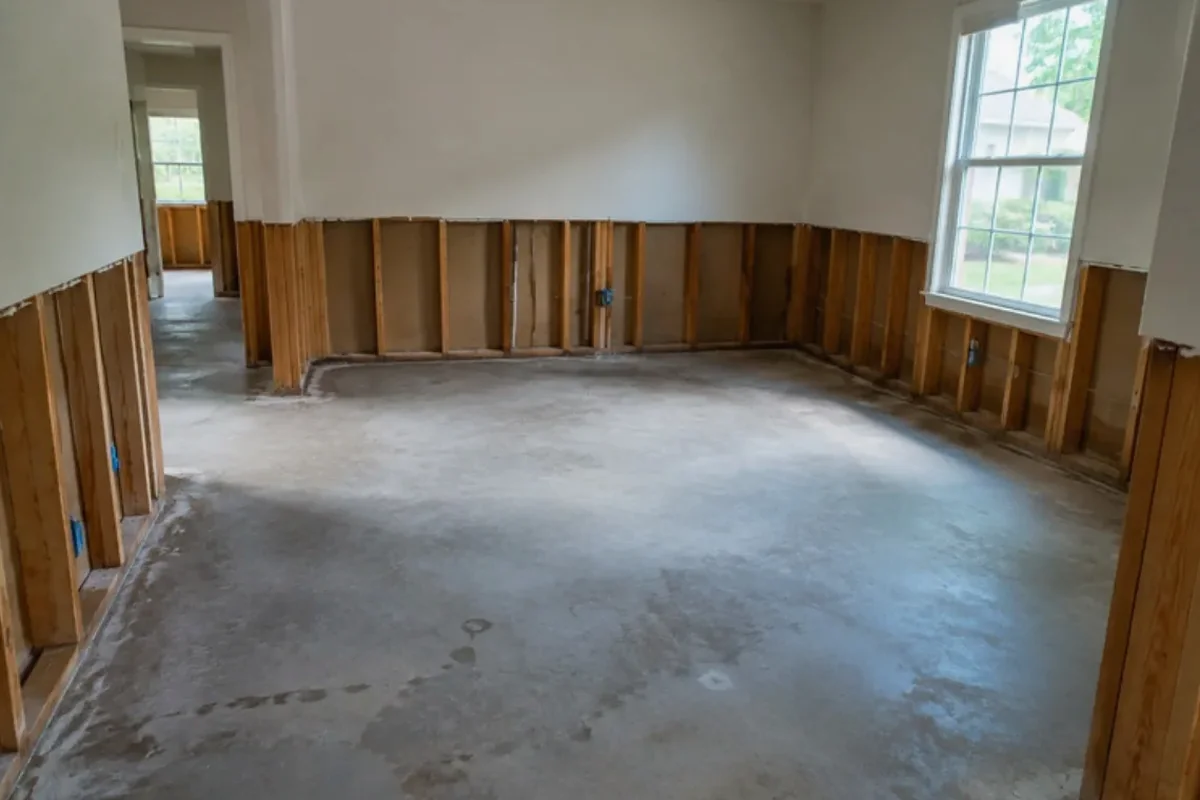
Do not trust a dry surface
A floor that looks dry can sit on a soaked subfloor, and a wall can feel firm while its insulation stays wet inside. Moisture meters, not eyes, tell the real story, and a local company will use one before deciding what is salvageable. Trust the meter.
Slab homes and sloped lots
Newer subdivisions around Zebulon often sit on slabs, where floodwater enters at door thresholds and wicks into drywall. Sloped lots with finished lower levels take on runoff from uphill, and those walk-out rooms hold the moisture. Those lower rooms often stay damp long after the rain ends.
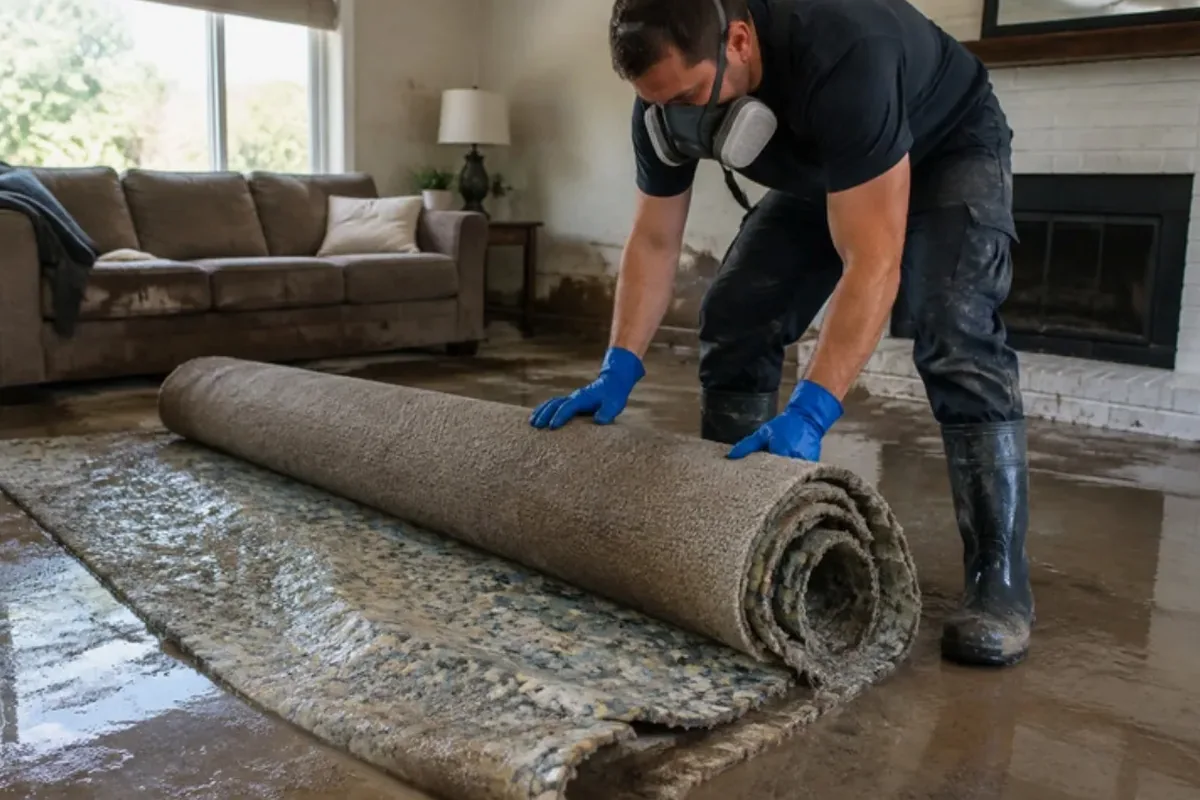
Drying equipment and time
Dehumidifiers, air movers and monitoring add up over several days. Companies usually price drying by the rooms involved and how long equipment runs, so keep a log of readings and ask for them. Faster action tends to shorten that run time. Moisture mapping shows which rooms count.
Before you hire in Wendell
Be wary of anyone who wants air sampling as the very first step. North Carolina's public health guidance warns about exactly that, and suggests asking plenty of questions before you pay.
Renting? N.C.G.S. 42-42 requires landlords to keep a home fit and habitable and to repair supplied plumbing and heating; outside an emergency, send the repair request in writing.
Cleanup on its own rarely needs a permit. Replacing framing, wiring, ductwork or plumbing afterward can, and Wake County Permits and Inspections can tell you what applies.
Flood water and a burst pipe are usually treated differently by insurers; the state's FRIS flood maps show whether a lot sits in a mapped flood zone.
Many of the same companies also take calls from Zebulon, Knightdale and Middlesex.
Containment and safety gear
Where mold is growing, the work area is sealed with plastic, negative air keeps spores from drifting and workers wear respirators. Expect closed vents and a bit of noise. Those steps protect the unaffected parts of the house while cleaning goes on. Containment keeps clean rooms clean.
Keep humidity in range
EPA suggests indoor humidity below about 60 percent, ideally 30 to 50. After a flood, running dehumidifiers for several days and checking readings helps the house finish drying, which matters when summer air outside is already muggy. Do not skip the rebuild questions, since that trade is often separate.
Storm & Flood Mold Removal questions in Wendell
My crawl space flooded but the house looks fine. Do I need to call?
Should I test the air after a flood?
How do I know if the crawl space is the problem?
Does a heavy tropical rain count as a flood?
More mold services in Wendell
Storm & Flood Mold Removal nearby
Helpful guides
Sources
- Wake County Permits and Inspections
- Wake County Permits and Inspections: flood information
- N.C. General Statutes 87-1: general contractor license
- NC Licensing Board for General Contractors: consumer FAQ
- NC Division of Public Health: choosing a mold consultant
- N.C. General Statutes 42-42: landlord to provide fit premises
- NC Flood Risk Information System
Last updated: