When mold is visible, sampling is usually unnecessary, and the NC Division of Public Health cautions against leading with air tests. A written scope of work matters more. Call the number on this page to be connected with a local mold company in New Hill.
If you rent
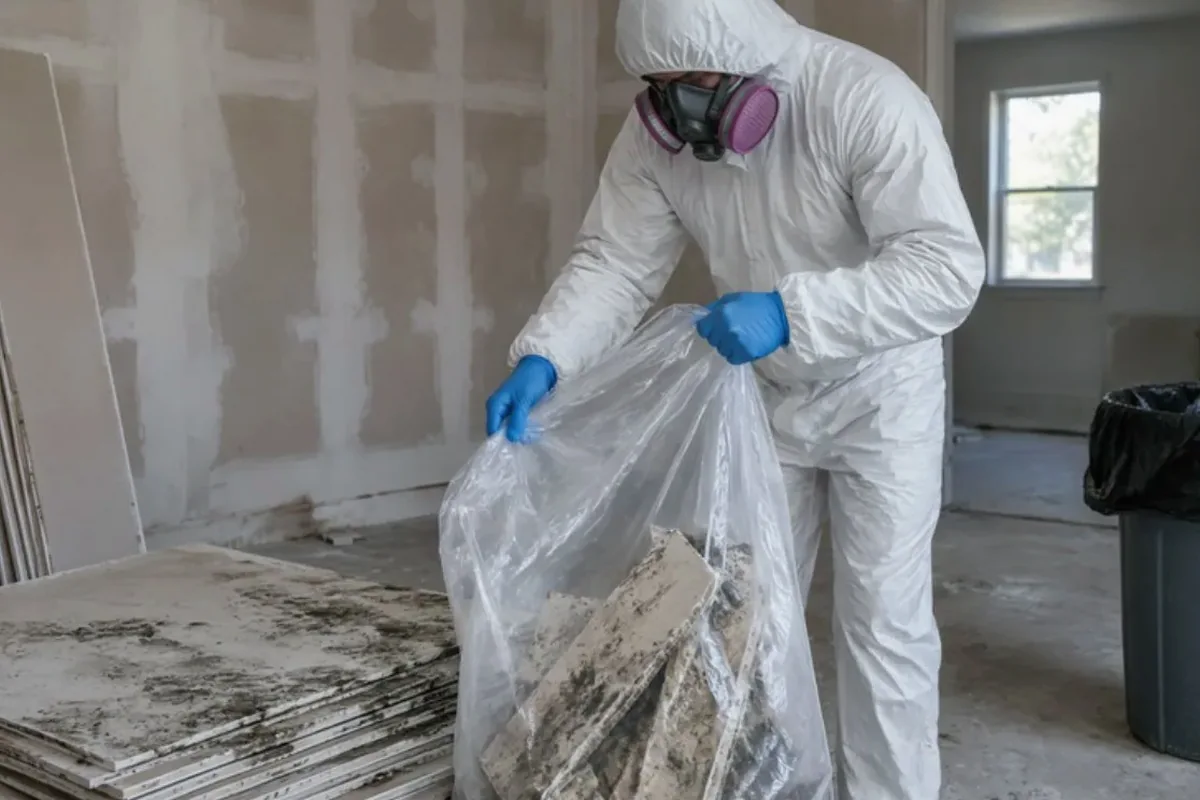
Tenants who spot dark growth should take dated photos and tell the landlord in writing. Skip any large cleanup on your own. State rental law gives each side certain duties, and the guide linked below explains what to document and who to contact first.
Pipes and hard freezes
A rare hard freeze can split a supply line in an attic, crawl space or exterior wall, and the damage may not show until the thaw. A slow leak behind drywall soaks it for weeks, so the first clue is often a dark stain or smell instead of a puddle.
Low ground along creeks and shorelines stays wet longer after storms. Houses here often show dark growth on lower drywall and wood framing after the water has receded but materials stayed damp.
Out in the country, a well pump room, a detached shop or an unused guest room can sit damp for months. Dark mold in those spaces often goes unnoticed until the smell gets strong.
Factors a company weighs
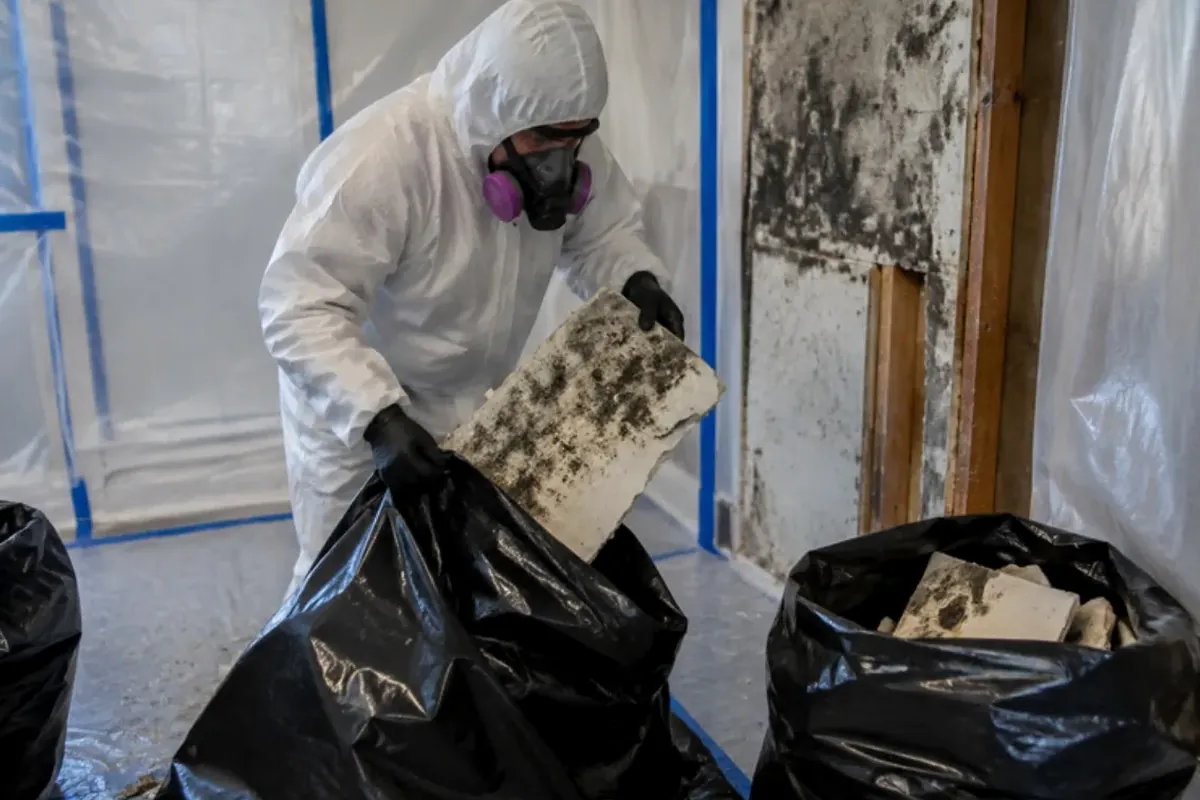
- Square footage of visible and hidden growth.
- Drywall, insulation or flooring that must come out.
- Height and access, such as attics and tight crawl spaces.
- Whether the water source is already repaired.
Keep assessor and remover separate
The NC Division of Public Health advises against hiring a consultant who also does the remediation. An independent party writing the scope and checking the result removes the conflict of interest. Ask any company how it handles that separation.
If a rental has it
Report dark growth to the landlord in writing and keep a copy. Under G.S. 42-42 a landlord must keep a rental fit and habitable after written notice. If nothing happens, ask the county or city housing office what options exist.
Before you hire in New Hill
Be wary of anyone who wants air sampling as the very first step. North Carolina's public health guidance warns about exactly that, and suggests asking plenty of questions before you pay.
In a rental, written notice to the landlord starts the clock under state law, which requires repairs that keep the unit in a fit and habitable condition.
Under G.S. 160D-1110, many repairs of $40,000 or less in a house need no permit, but structural, plumbing, electrical and HVAC changes do. Check with Wake County Permits and Inspections.
Flood water and a burst pipe are usually treated differently by insurers; the state's FRIS flood maps show whether a lot sits in a mapped flood zone.
Many of the same companies also take calls from Holly Springs, Moncure and Apex.
Black Mold Removal questions in New Hill
Does bleach kill black mold?
Should I leave the house during removal?
What does a company do about hidden growth?
Does flood or storm water make it worse?
More mold services in New Hill
Black Mold Removal nearby
Helpful guides
Sources
- Wake County Permits and Inspections
- Wake County Permits and Inspections: flood information
- N.C. General Statutes 87-1: general contractor license
- NC Licensing Board for General Contractors: consumer FAQ
- NC Division of Public Health: choosing a mold consultant
- N.C. General Statutes 42-42: landlord to provide fit premises
- NC Flood Risk Information System
Last updated: