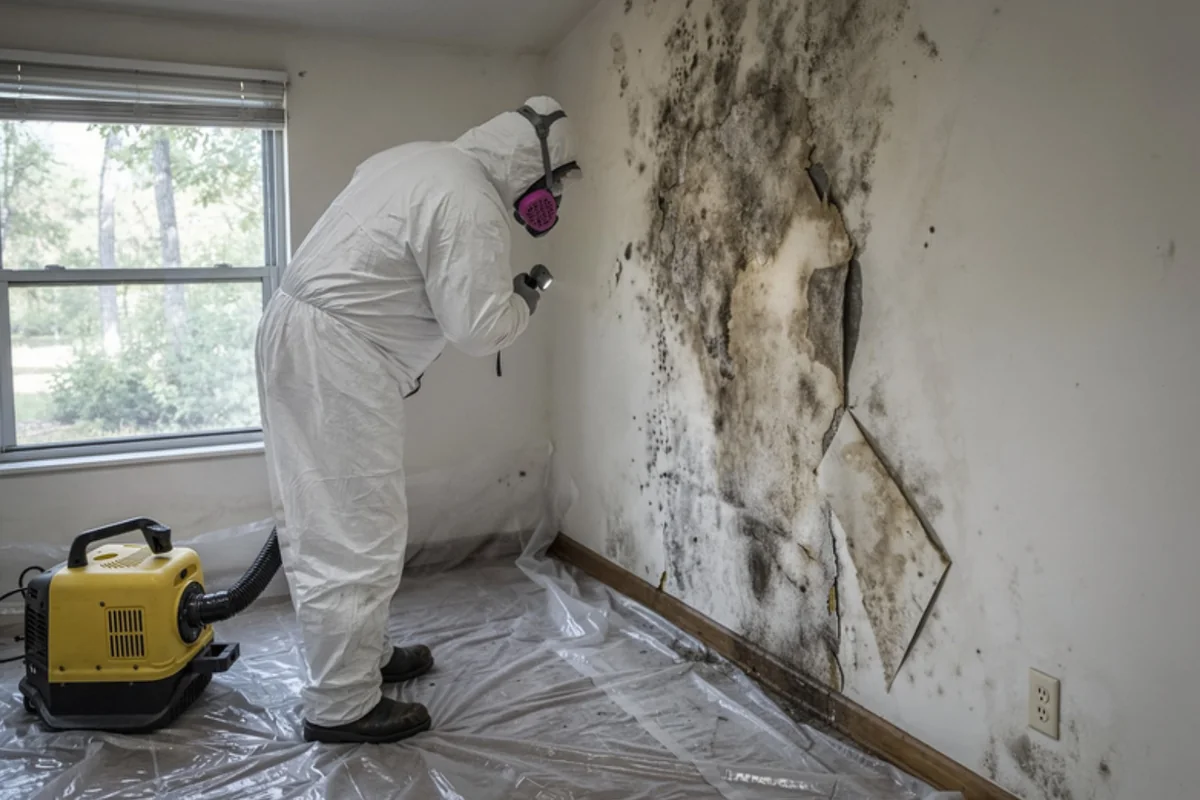
Porous materials such as soaked drywall, ceiling tile and insulation that stay moldy usually have to be removed, while framing and hard surfaces are cleaned. That follows EPA guidance and shapes most work plans. Call the number on this page to be connected with a local mold company in Middlesex.
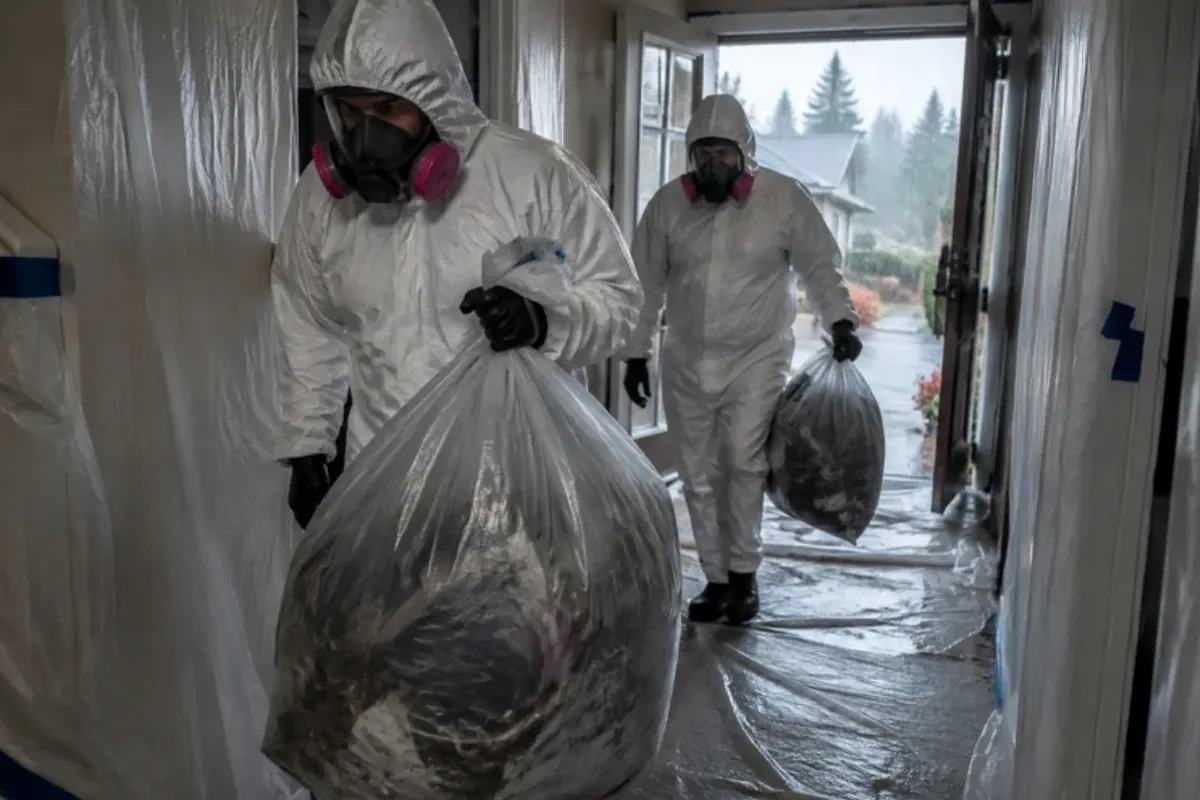
Containment keeps the mess in one room
Plastic sheeting, taped seams and a fan that pulls air out of the work zone stop dust from traveling through the house. Crews often run an air scrubber too. The setup takes time at the start, and it is worth it.
Ask where the barrier will go.
Heavy tropical rain tests every seam
Storm remnants moving through central North Carolina can drive water past old flashing, under doors and up through slabs. Even homes well away from a creek see damp walls after a long soaking, and the humid weather afterward slows drying.
Running a dehumidifier after a big storm is wise, since drying slows when the air outside is heavy.
Homes out in the country often have private wells, older plumbing and long driveways that water runs toward. Expect the company to look at drainage and outbuildings, and not just the main house.
What moves the price
- Square footage affected
- How many materials come out
- Crawl space or attic access
- Containment and air scrubbing needs
- Days of drying equipment
- Rebuilding afterward
None of these is fixed, because every house differs. A fair quote shows how each one applies, and a written scope shows which are actually part of the job.
Check the license, not the brochure
For a big enough job, the company needs a general contractor license from the NC Licensing Board for General Contractors. You can look it up online through NCLBGC before signing, which takes a minute and saves a lot of trouble.
A clear plan reduces surprises for everyone involved.
When a DIY cleanup makes sense
For a spot smaller than about 10 square feet on a hard surface, with the moisture already fixed, many owners handle it themselves with detergent and water. If it is larger, comes back or sits in drywall, bring in a local company.
Humidity control after the work keeps the problem from coming back quickly.
Local facts for a Middlesex mold job
State public health staff advise asking questions before you pay, checking whether a company belongs to trade groups and follows industry guidelines, and keeping the assessment separate from the cleanup.
Tenants should put leak and mold complaints in writing. North Carolina's landlord statute, G.S. 42-42, covers repairs needed to keep a rental fit to live in.
Once the moldy material is gone, the rebuild is its own step, and some of it, like new ductwork or structural framing, may need sign-off from the local building department.
After heavy Piedmont rain, the NC Flood Risk Information System is the place to check a property's flood zone before talking to the insurance company.
Help is also available nearby in Zebulon, Bailey and Wendell.
Mold Removal & Remediation questions in Middlesex
Do I need to fix the leak first?
Is bleach a good way to kill mold?
When can I clean mold myself?
Who checks that the job was done right?
More mold services in Middlesex
Mold Removal & Remediation nearby
Helpful guides
Sources
- N.C. General Statutes 87-1: general contractor license
- NC Licensing Board for General Contractors: consumer FAQ
- NC Division of Public Health: choosing a mold consultant
- N.C. General Statutes 42-42: landlord to provide fit premises
- NC Flood Risk Information System
- EPA: A Brief Guide to Mold, Moisture and Your Home
Last updated: