After a flood, mold can start growing on wet materials within a day or two. EPA advises drying everything within 24 to 48 hours, and porous items that stay soaked, like carpet, pad and insulation, usually have to be discarded. Call the number on this page to be connected with a local mold company in Angier.
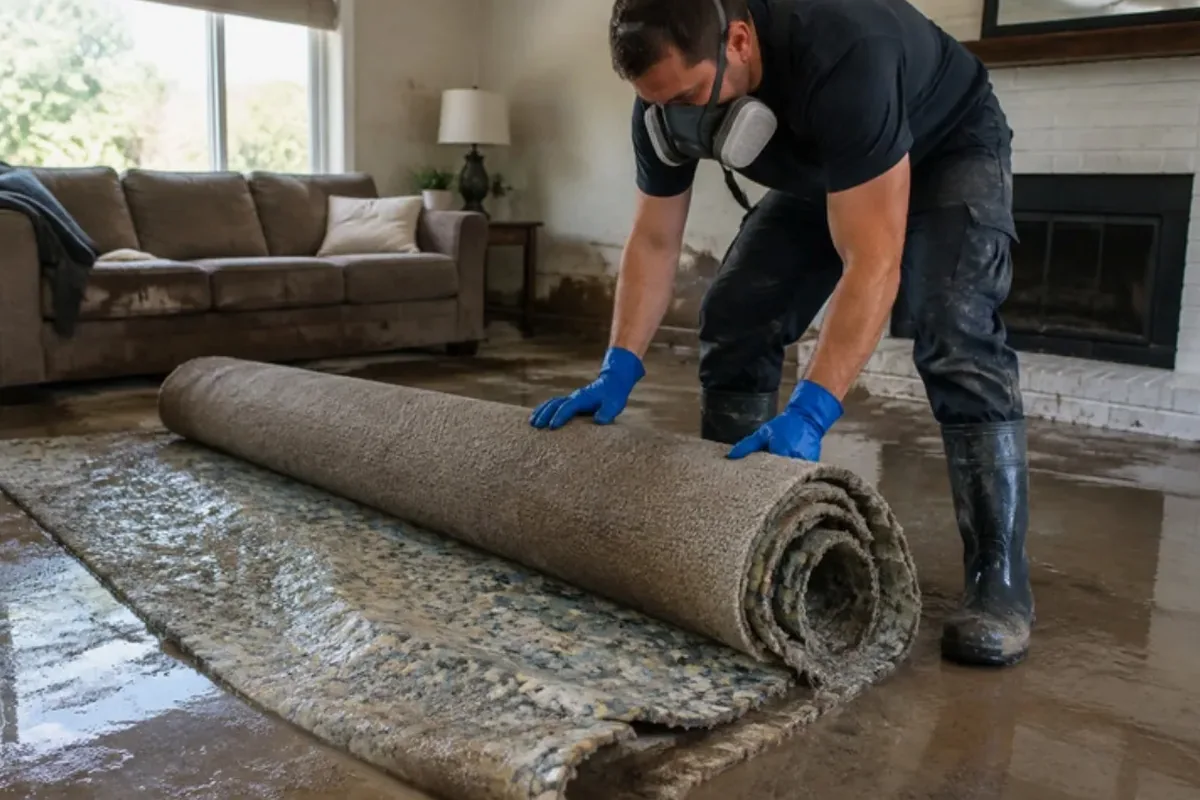
Smell it, then trace it
After a storm, a stale basement-like smell in a house that never had one is a flag. Check under sinks, inside closets on outside walls, and along the base of cabinets, where rainwater and groundwater creep in and stay. Closets on outside walls are a common culprit.
Crawl spaces fill and stay wet
Most Triangle houses sit over a vented crawl space. Rain-swollen ground sends water through the vents and under the sill, soaking insulation, ducts and the underside of the floor. Water there drains slowly because clay soil does not. Water there drains slowly because the soil does too.
Before you hire in Angier
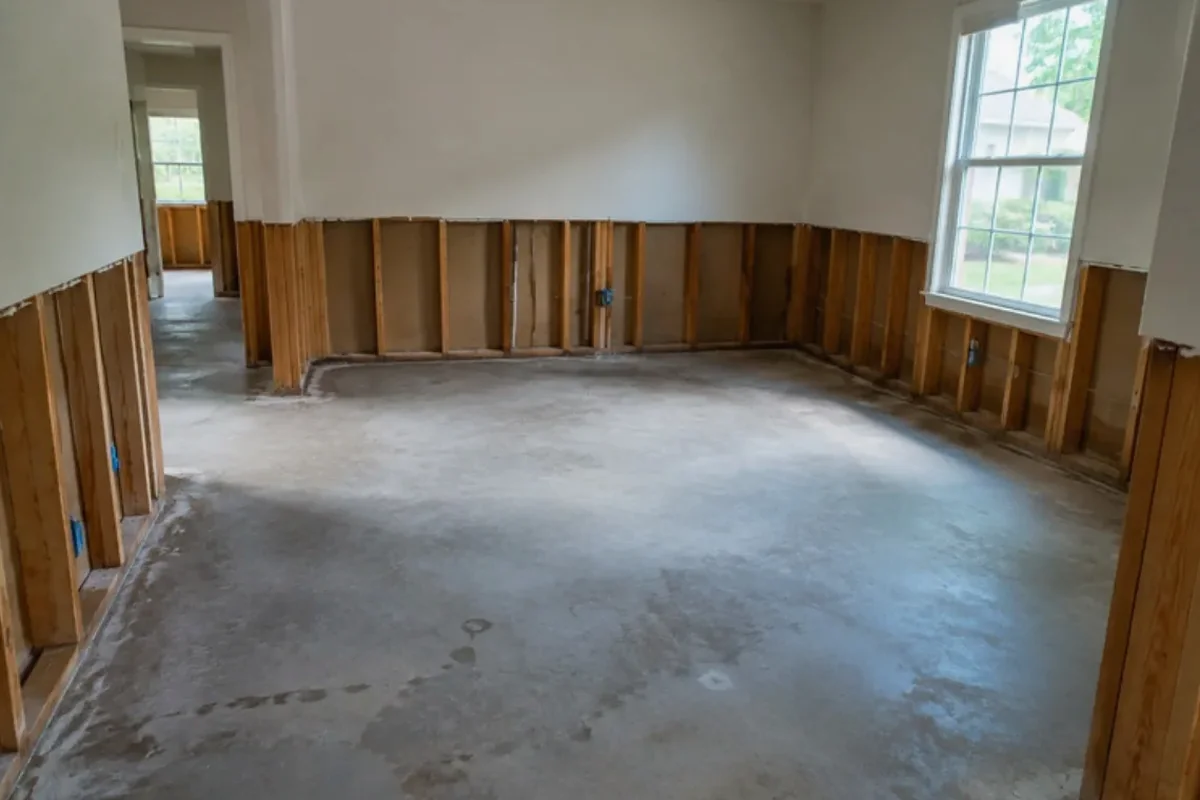
For a big tear-out and rebuild, look the company up on the NC Licensing Board for General Contractors site; its search works by name, number or county, and a license is required at $40,000 and up.
In a rental, written notice to the landlord starts the clock under state law, which requires repairs that keep the unit in a fit and habitable condition.
Under G.S. 160D-1110, many repairs of $40,000 or less in a house need no permit, but structural, plumbing, electrical and HVAC changes do. Check with the local building department.
Flood water and a burst pipe are usually treated differently by insurers; the state's FRIS flood maps show whether a lot sits in a mapped flood zone.
Callers here are often matched with companies that work in Fuquay-Varina, Willow Spring and Coats as well.
Getting comparable bids
Request written scopes naming each room, the drying plan, the removal list and what is excluded. A lump sum with no detail makes comparison impossible and leaves you exposed if the work grows. Use the same list for each bidder in Harnett County. Detail protects you if the job grows beyond the first estimate.
Crawl space work
Crews usually pump out water, remove saturated insulation and vapor barrier, treat and dry the framing, and check ducts and the air handler. Some homeowners add a vapor barrier or dehumidifier afterward to stop the next storm from repeating the cycle. Some add a dehumidifier.
Keep humidity in range
EPA suggests indoor humidity below about 60 percent, ideally 30 to 50. After a flood, running dehumidifiers for several days and checking readings helps the house finish drying, which matters when summer air outside is already muggy. Do not skip the rebuild questions, since that trade is often separate.
Storm & Flood Mold Removal questions in Angier
Can I run fans and a dehumidifier myself?
Does a heavy tropical rain count as a flood?
Can a landlord ignore storm damage?
Do I need a license-holder for a big flood repair?
More mold services in Angier
Storm & Flood Mold Removal nearby
Helpful guides
Sources
- N.C. General Statutes 87-1: general contractor license
- NC Licensing Board for General Contractors: consumer FAQ
- NC Division of Public Health: choosing a mold consultant
- N.C. General Statutes 42-42: landlord to provide fit premises
- NC Flood Risk Information System
- EPA: A Brief Guide to Mold, Moisture and Your Home
Last updated: